 →
→ 

Easy Sourdough Sandwich Bread
 By Alexandra Stafford
—
Last Updated: 03/04/2026
By Alexandra Stafford
—
Last Updated: 03/04/2026
This post may contain affiliate links. Please read my disclosure policy.
This 4-ingredient sourdough sandwich bread requires no complicated shaping, no scoring, and no preheated heavy Dutch oven. Grab your mixing bowl, pull out a spatula, and butter your loaf pan. This one is simple and delicious!
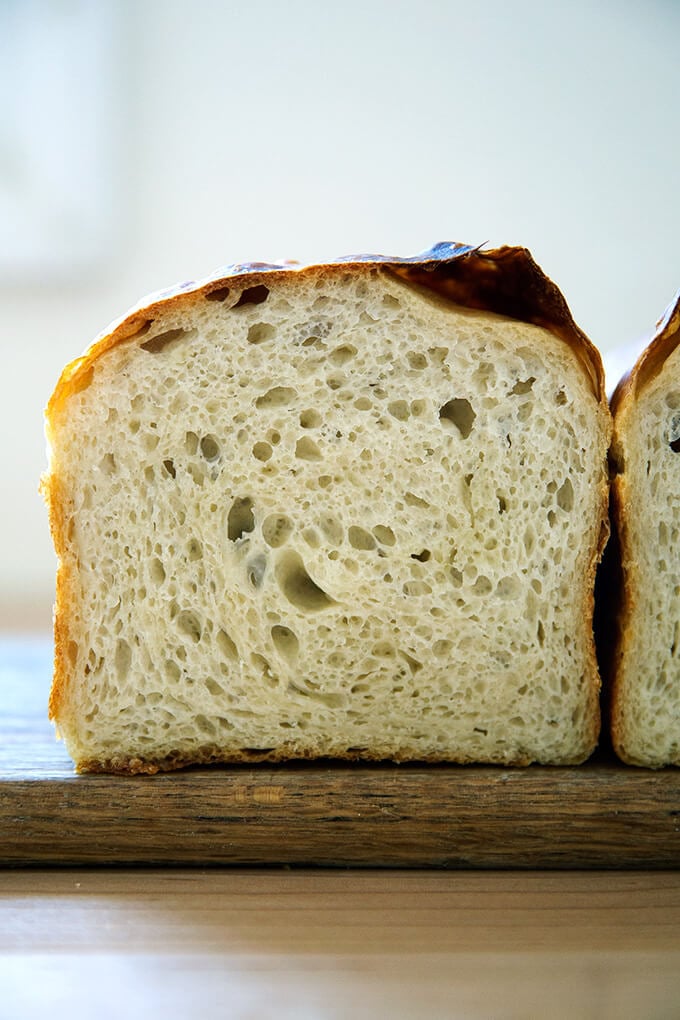
As its name suggests, this sourdough sandwich bread recipe is easy, a simple mix of flour, water, salt, and sourdough starter. In sum, it’s an adaptation of my mother’s peasant bread recipe with the sugar and yeast omitted and sourdough starter added. Like this sourdough focaccia, the dough is high-hydration, which yields a soft crumb, perfect for sandwiches when freshly baked and excellent for toast, too.
In the world of sourdough bread baking, crusty boules, open-crumbed rolls, and pillowy focaccia get all the glory. But I would argue a simple sandwich loaf deserves just as much praise, if not more, not only for its ease in assembly, but also its utility.
Find step-by-step instructions as well as video guidance below.
PS: How to Build a Sourdough Strater from Scratch
PPS: How to Activate, Feed, and Maintain A Sourdough Starter
How to Make Sourdough Sandwich Bread, Step by Step
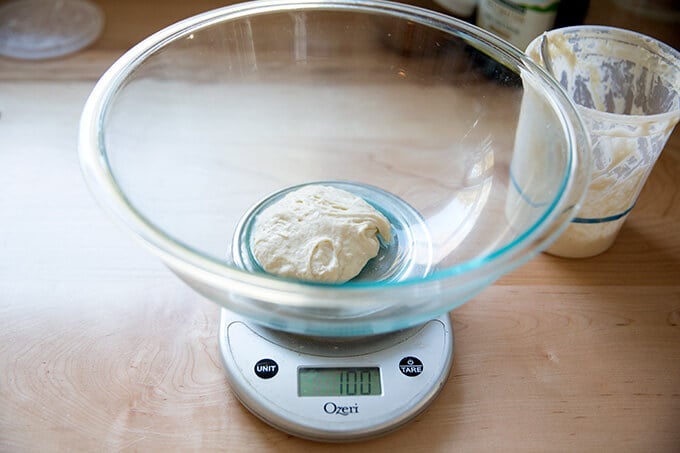
First, place 100 grams of starter in a large bowl. As always, for best results, please use a digital scale to measure.
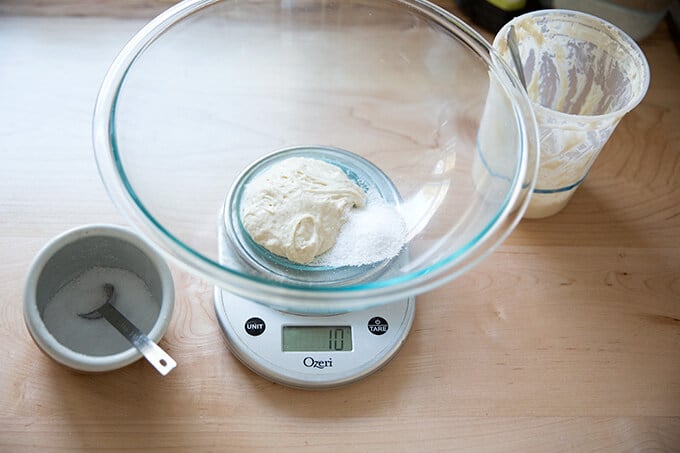
Add 10 grams of salt.
Add 430 grams of water. (You may need to use less water: see recipe box for notes.)
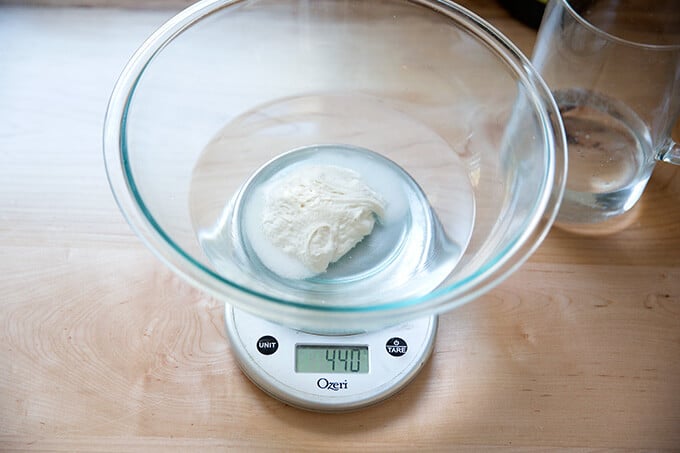
Stir to combine.
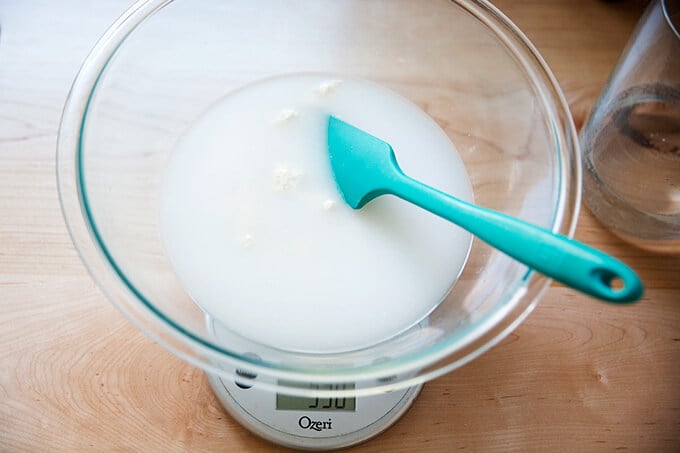
Then add 512 grams of bread flour.
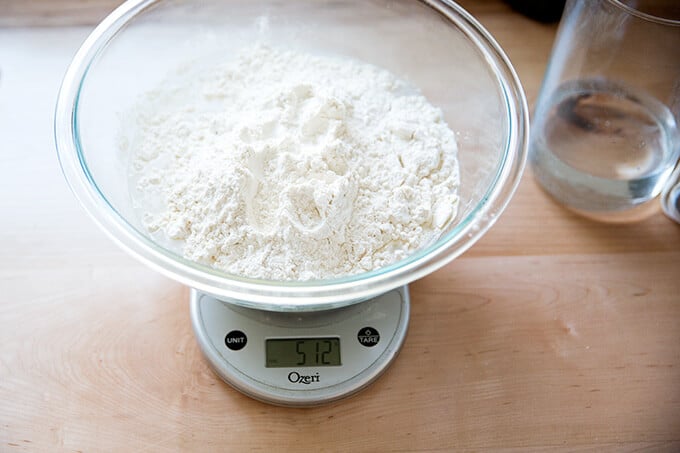
Stir to form a sticky dough ball.
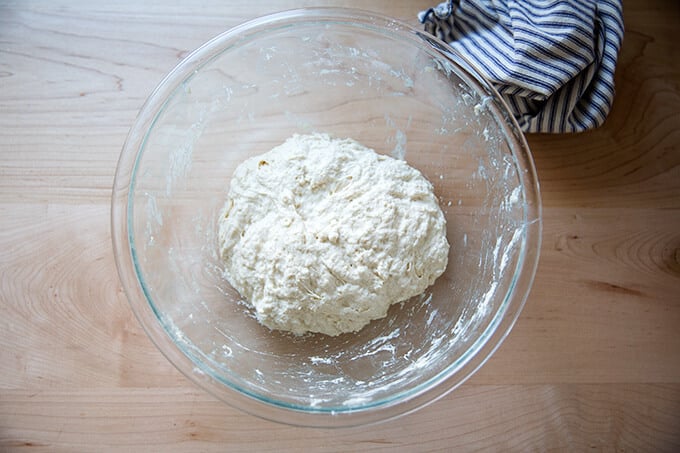
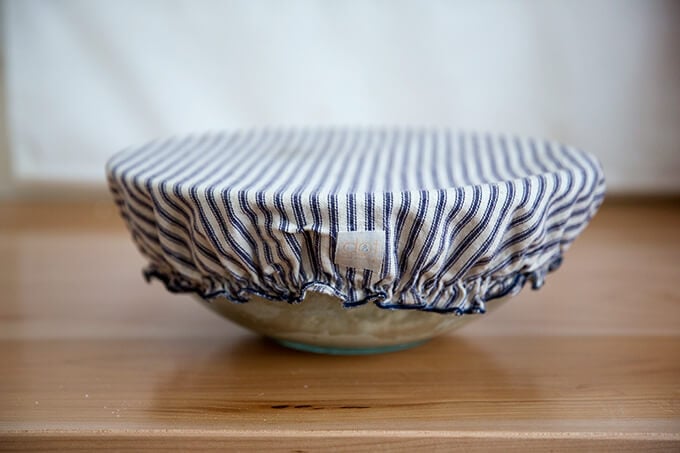
Cover with a towel or cloth bowl cover or, preferably, a lidded vessel, and let rest for 30 minutes.
Then, perform a series of stretches and folds. See video for guidance (skip ahead to 1:13). Repeat this 3 more times for a total of 4 sets of stretches and folds during the first two hours. Then, let rise for 6 to 18 hours* (see recipe notes) at room temperature:
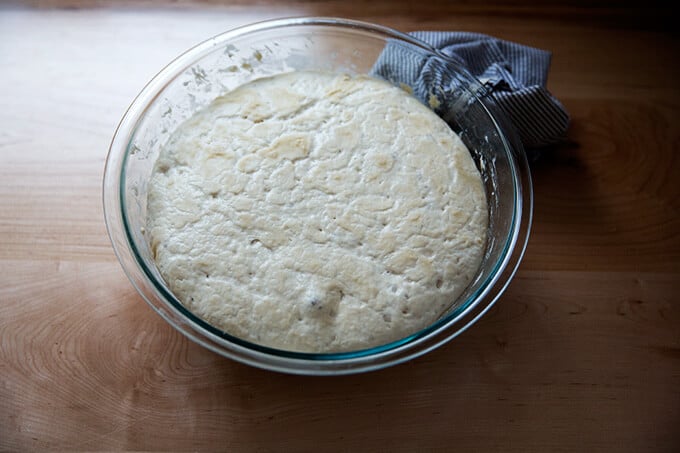
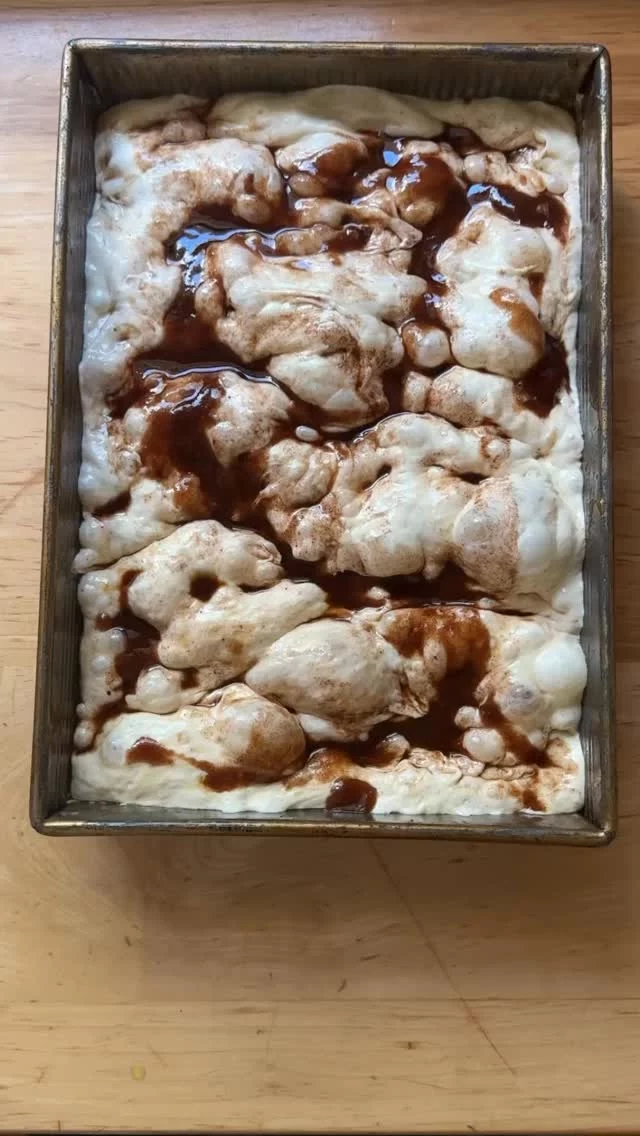
Drizzle the surface of the dough with a little bit of olive oil; then fold the dough inwards from the sides to deflate.
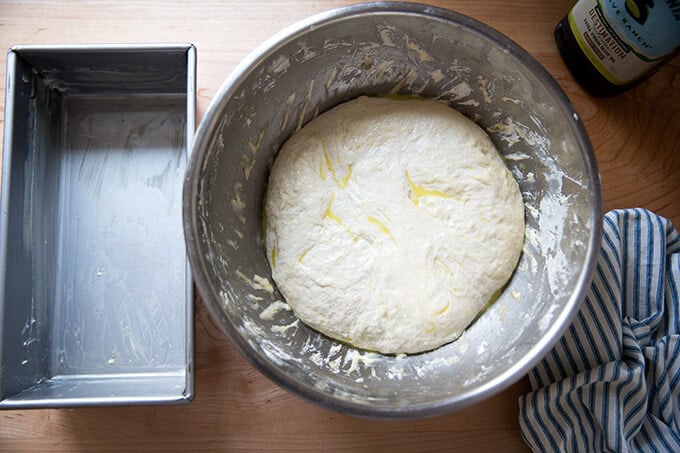
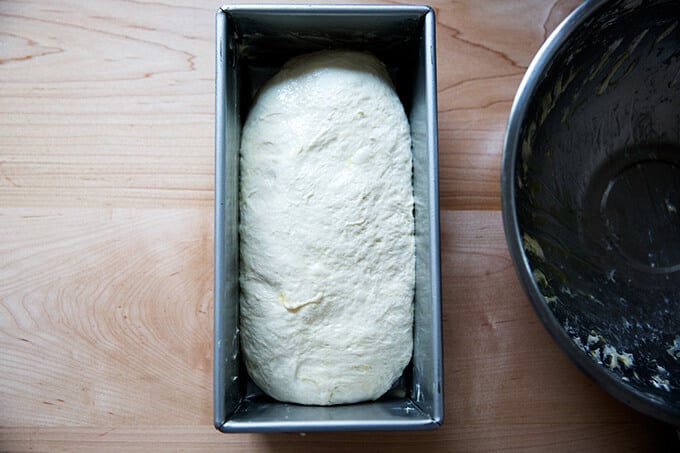
Transfer the dough to a large, buttered loaf pan. I use this 10 x 5-inch loaf pan but a 9×5-inch loaf pan will also work.
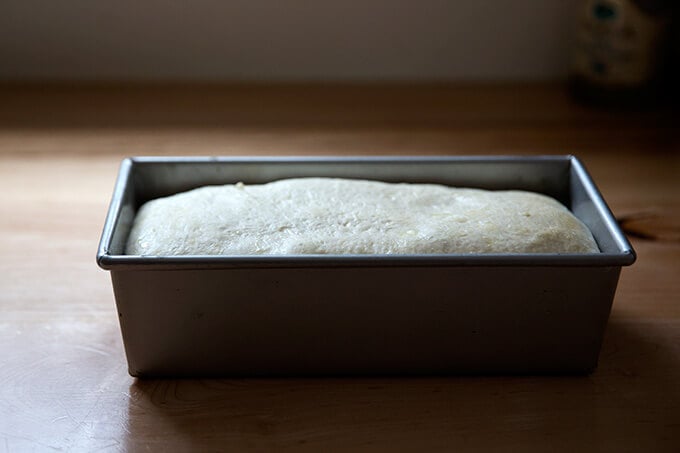
Let the dough rise just until it begins to crown the rim of the pan, about 6 hours.
Bake for about 45 minutes or until golden brown all around.
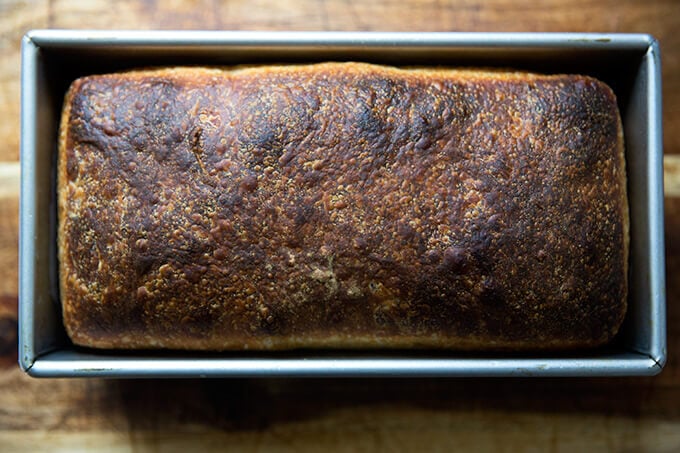
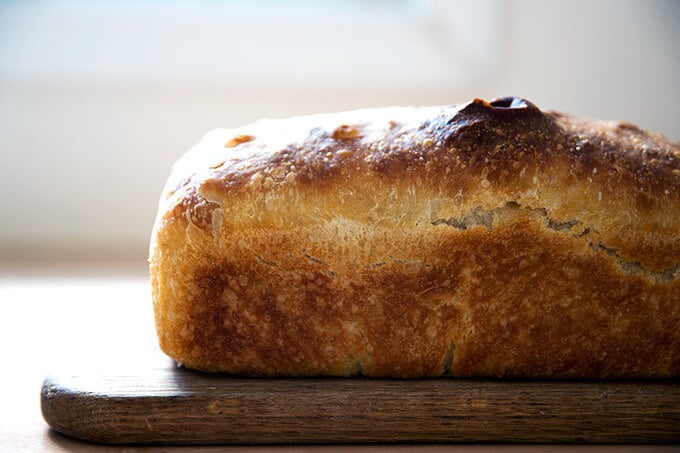
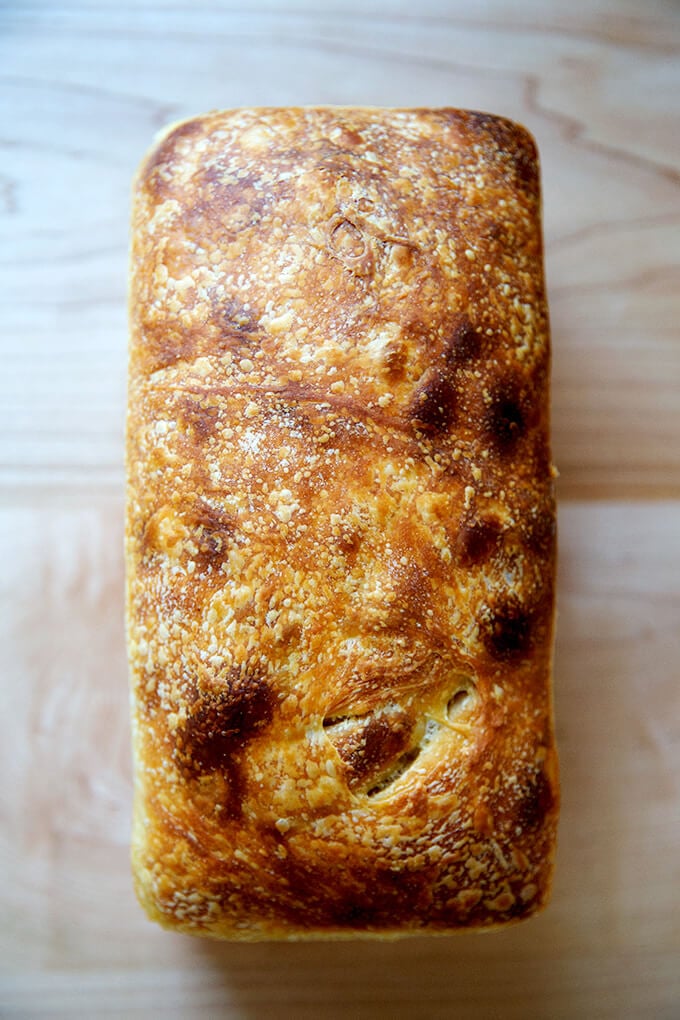
Let cool for at least 30 minutes before slicing.
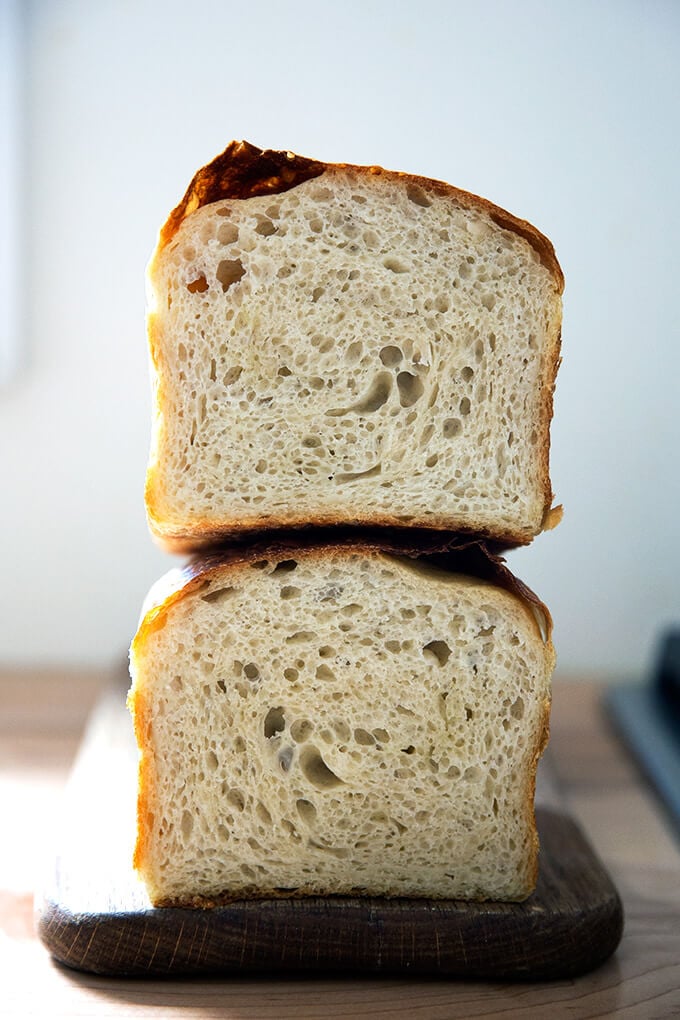
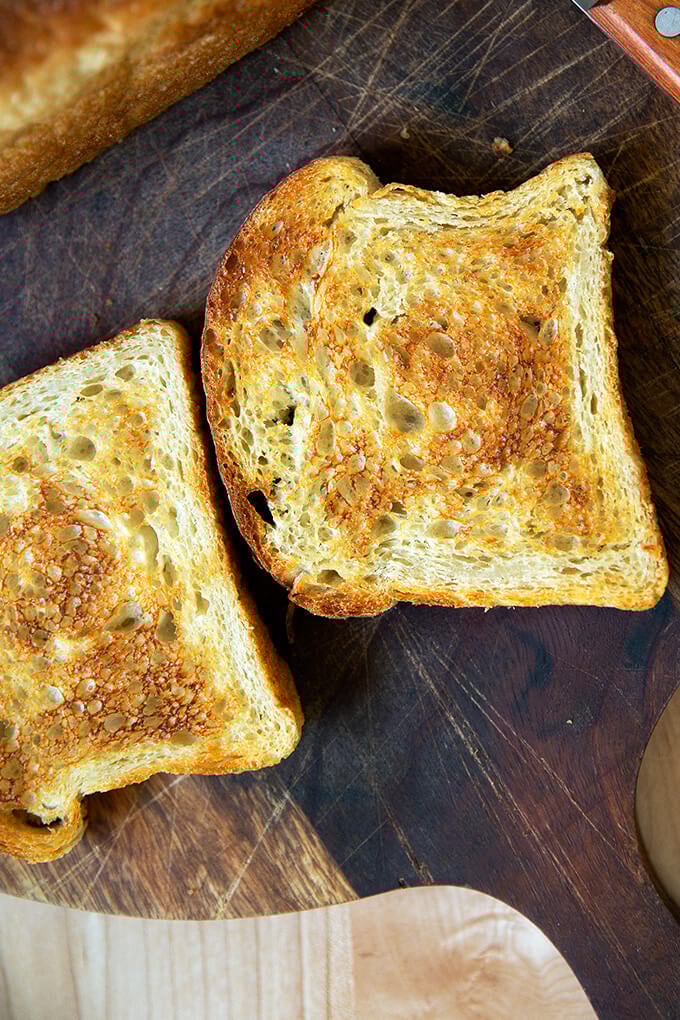
It makes excellent toast, too.

I love this tall-sided pullman loaf pan, too:

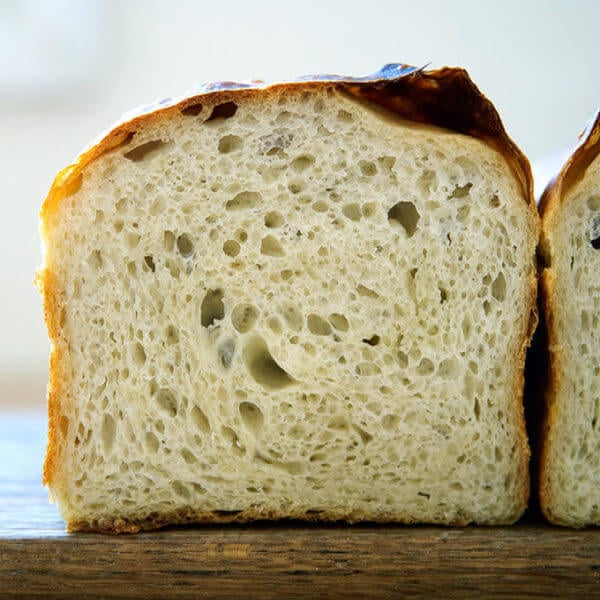
Easy Sourdough Sandwich Bread
- Total Time: 24 hours 40 minutes
- Yield: 1 loaf 1x
Description
This easy sourdough sandwich bread requires no complicated shaping, no scoring, and no preheated heavy Dutch oven. Grab your mixing bowl, pull out a spatula, and butter your loaf pan. This one is simple and delicious!
Notes:
Pan: You’ll need either a 10 x 5-inch loaf pan or a 9×5-inch loaf pan.
Plan ahead: This dough rises first for 6 to 18 hours (or less if it is super hot out or if you live in a humid area) or until the dough doubles in volume; then again for about 4 to 6 hours or until the dough crowns the rim of the baking vessel.
Troubleshooting: If you have issues with your dough being too sticky, please read this post: Why is my sourdough so sticky? The 4 common mistakes.
If you’re just getting started with sourdough, check out this post first. You’ll find tips there on procuring a starter as well as how to feed it and maintain it. If you’re up for making your starter from scratch, you can do so in just about 1 week.
Water: Chlorine in water can adversely affect sourdough. Leaving water at room temperature for 24 hours will allow most of the chlorine to escape. When I am in the habit of making sourdough bread, I fill a large pitcher with water and leave it out at room temperature. I use this for my sourdough breads and starter. Truth be told, I’ve used water straight from the tap and have not noticed a difference.
Water quantity: Also, depending on where you live and the time of year, you may need to cut the water back. If you live in a humid environment, for instance, I would suggest starting with 400 g or 420 g water. If you are not using bread flour, you also may need to cut the water back a bit. So much success with sourdough relies on getting the water quantity right.
Starter: I use a 100% hydration starter, meaning it is equal parts by weight flour and water. If you need guidance on how to maintain a starter, see this post.
Ingredients
- 100 grams (about 1/2 cup) active starter, see notes above
- 10 grams (about 2.5 teaspoons) kosher salt
- 430 grams water (or less, see notes above), room temperature
- 512 grams (4 cups) bread flour, such as King Arthur Flour
- a few tablespoons extra-virgin olive oil
- room temperature butter, for greasing
Instructions
- Mix the dough: Place the starter, salt, and water in a large bowl. Stir with a spatula to combine — it doesn’t have to be uniformly mixed. Add the flour. Mix again until the flour is completely incorporated. If you have a straight-sided vessel, transfer the dough to it — it really helps monitor the rise and allows you to see the true growth in volume of the dough.
- Perform one (or more) “stretches and folds”: 30 minutes after you mix the dough, reach into the bowl and pull the dough up and into the center. Turn the bowl quarter turns and continue this pulling 8 to 10 times. See video for guidance. If time permits, repeat this “folding” step every 30 minutes for the first two hours. (Note: even if you perform just 1 fold, your dough will be in good shape.)
- Let it rise. Drizzle with a splash of olive oil and rub to coat. Cover bowl with a tea towel, bowl cover, or a lidded vessel, and set aside to rise at room temperature (70ºF/21ºC) for 4 to 18 hours — if it is super hot out or if you live in a humid environment, it may only take 4-6 hours. When the dough has nearly doubled in volume (or UPDATE: increased in volume by 50%, which is when I now end the bulk fermentation), it is ready. (Note: Do not use an oven with the light on for the bulk fermentation — it will be too warm. It is best to rely on visual cues (increasing in volume by 50% or doubling if you’ve had success with doubling) as opposed to time to determine when the bulk fermentation is done. A straight-sided vessel makes monitoring the bulk fermentation especially easy.)
- Prepare the pan. When the dough has nearly doubled, grease a 9×5-inch loaf pan or 10 x 5-inch loaf pan with butter (or nonstick spray).
- Let it proof. Drizzle dough with a few tablespoons of olive oil. Rub your hands with a little bit of oil to coat. Use your hand to release the dough from the sides of the vessel, being careful not to completely deflate the dough. Video guidance here. Turn the dough out onto a work surface. Quickly, shape the dough into a rectangle — fold the dough envelope-style first; then use a bench scraper to shape the dough into a rough rectangle. Transfer dough, seam-side down to prepared loaf pan and gently stretch into an oblong shape. (At this point, you can transfer the pan to the fridge if it makes sense with your schedule: rub the dough with oil and cover with plastic wrap, or tuck the whole pan into a 2-gallon ziptop bag. Transfer to the fridge till the next day. Then proceed with the recipe.) Leave the pan alone for 5 to 6 hours, or until the dough reaches the rim of the pan — this may take less time when it is very warm out. Do be patient with this second rise: to get good height, the dough should be near the rim of the pan before you transfer it to the oven.
- Bake it. Heat oven to 425ºF. Transfer the pan to the oven and bake for about 20 minutes. Reduce heat to 375ºF. Bake for 20 to 25 minutes more or until golden all around. If you have an instant read thermometer, it should register 206-210ºF or so before removing. Remove the pan from the oven and turn the bread out onto a cooling rack. Cool for at least 30 minutes before slicing.
- Prep Time: 24 hours
- Cook Time: 45 minutes
- Category: Bread
- Method: Sourdough/Natural Leavening
- Cuisine: American
This post may contain affiliate links. Please read my disclosure policy.













1,405 Comments on “Easy Sourdough Sandwich Bread”
This recipe is 10/10! This is my first time making sourdough and this recipe made it easy, enjoyable, and delicious!
Great to hear, Gwen! Thanks so much for writing and sharing this 🙂
I’m back, made a double batch with the lids and they came out AMAZING! I really appreciate the measurements and the internal temperature. On to your pizza dough recipe next, thank you!
Oh great to hear! Thanks so much for circling back and sharing this. I might need to get some of those lidded pans 🙂
Very good sourdough bread I made it with whole wheat starter.
Great to hear, Jim! Thanks for writing 🙂
I made this yesterday and am very happy with the results. Bread turned out beautifully and looked exactly like the picture. Bonus was it can be made the same day. This loaf is definitely good enough to replace store bought bread!
Great to hear, Leslie! Thanks so much for writing and sharing this 🙂
Love this recipe! This is my second time making it as an inexperienced baker and I’ve already got fantastic results today! I replaced 25% of the flour with with whole wheat – half hard red wheat (high gluten) half King Arthur’s golden whole wheat (white, sweet, lower gluten) and it came out beautifully even without increasing the hydration. Moist, buttery and supple!
Thank you for an excellent recipe and for great instructions and guidence!
Great to hear, Yaniv! Thanks so much for writing and sharing your notes/experience. Your flour substitutions sound lovely.
This is the best sourdough sandwich bread recipe. I’ve made it for four years! Today I milled my own wheat for the first. Do you have any advice for making this recipe with freshly milled wheat? Thank you!
Great to hear, Ann! I don’t have too much advice as I’ve never used home-milled flour, but my understanding is that the home milled flour might be a little thirstier, so you may need to up the hydration. I’d also consider starting small: maybe try using 25% home-milled flour, 75% bread flour and see how it turns out; then you’ll be able to make better adjustments the next time around either with more water or a higher percentage of home-milled flour, etc.
quick question: How do I keep the loaf fresh ? I am thinking of making it the day before i need it… How do you store it? Thanks Paula
I store it in an airtight bag at room temp for up to 3 days. If I think I’ll need to store it longer, I’ll freeze it.
The Bread turned out fantastic . Your instructions were spot on. My husband would like some whole wheat added to the bread. Will this affect the water ratio? Any advice would be greatly appreciated.
Start with swapping in 25% ww flour without making any other changes. Depending on your result, you can increase the percentage the next time around. Keep in mind, the more ww flour you use, the denser your loaf will be.
Do you bring it to room temperature when you take it out of the fridge or bake it right away
The dough needs to crown the rim of the pan before it goes in the oven. If your dough is crowning the rim of the pan when you pull it from the fridge, it can go straight in the oven. Otherwise, let it sit at room temperature until it crowns the rim.
Thank you for all your support and suggestions you have great recipes.
I’m so glad I read people’s posts
I was just panicking when I pulled out my loaf from the fridge. It’s definitely risen a lot. Thank goodness I didn’t leave it out longer.
The dough is very giggly, more than I’m used to. Hope it works.
If you choose to put the shaped dough into the fridge overnight, do you then proceed to take it out the next day and leave at room temperature for 5-6 hours, or until risen to almost rim height?
Correct! Rely more on the visual cues than the timeline: you want the dough to crown the rim of the pan before baking it. Consider covering the pan, too, for the first few hours or until the dough begins approaching the rim to prevent it from drying it out.
Thanks for the recipe! My sourdough came out way too sour tasting for my liking. What did I do wrong? Any suggestions?
Hi Jordan! Are you new to sourdough? Can you tell me a little bit about your starter? Did you make it from scratch? What type of flour are you using to feed it? How often do you feed it?
This was the first recipe I’ve failed at. I measured to the gram and the dough is loose and super sticky. Currently letting it sit again after adding quite a bit more flour. To be continued
Hi Carie,
What kind of flour (brand included) are you using? And do you live in a humid environment?
This loaf turned out perfect. At first the dough was wet and sticky. This has never happened before. Then, I realized I added the olive oil to the dough when I was supposed to pour in top and coat my fingers with it. I added a bit more flour and crisis averted. While I was at it, I added a few teaspoons of honey to the dough. Nice crust and soft inside. Thank you for sharing this recipe.
Great to hear, Carie! Thanks for writing and sharing your notes. So glad it was a success 🙂
This is by far the best sourdough recipe that results in a great loaf of bread that I was not a slave to ! Thank you for sharing
Great to hear, Anita! Thanks for writing and sharing this 🙂
Just wondering to make 2 loaves are all the ingredients doubled, if not could you please provide the exact measurements, thank you!
Yes, double everything! Ideally you are measuring with a scale 🙂
Step 5 is confusing. Does it have to go in the fridge or not? It says put it in the fridge if it makes sense for your schedule. Then it says put it in the fridge overnight, then it says don’t touch it for 6 hours. ??? First time baker here so I’m confused.
I ended up having it in the fridge for 3 hours, and the counter for 2. It was crowing the top of the pan. It turned out pretty good! But the top was rock hard during baking and the end result is a bit gummy and slightly undercooked at the very bottom. It was about 195° but had been in the oven for much longer than the recipe called for. Overall I’m happy with it as my first loaf. Any feedback is appreciated 🫶 Thank you.
OK, interesting.
Questions: Are you using a scale to measure?
What type of flour (brand included) are you using?
When the dough was in the fridge, was it covered/protected? Did it look as though a crust/skim had formed on the top of the dough either in the fridge or at room temperature?
Sorry about that! I think there was an extra parenthesis messing you up… I just deleted it. In sum: you can stick the shaped loaf in the fridge after the bulk fermentation if that works better for you timing wise, or you can let it sit at room temperature until the dough reaches the rim of the pan, at which point it will be ready to bake.
Regarding my last post, I just read that King Arther flour is very absorbent, which maybe why I and others who haven’t used it, have had wet dough. I think there is a fine line between too much and too little. I started with 400 g of water and before I even finished mixing it completely I knew I would need more. Yet adding the 25g ended up being too much. Hmmm, I’m wondering if I used the full 430, yet 5g of water isn’t much.
I’d highly recommend starting with say 375g of water and then only after mixing it completely and doing some folds and handling it, adding 10g more at a time. Just a thought and what I’ll try next.
I will say the bread was very tasty and wasn’t too heavy, just not a sandwich result yet. I’ve also read that cutting the loaf before waiting an hour can make the loaf gummy. And yet despite waiting an hour mine is a tad gummy.
Hi Paul! Thanks so much for writing and sharing all of this. I do think that the crux of sourdough is dialing in on the flour to water ratio given the flour you are using and your environment. I think your advice to start with 375 g water is solid. It does sound as though something closer to 400 grams of water would be better for you given your flour/environment. I hope you find the magic ratio soon 🙂