 →
→ 

Homemade Sourdough English Muffins
 By Alexandra Stafford
—
Last Updated: 08/25/2025
By Alexandra Stafford
—
Last Updated: 08/25/2025
This post may contain affiliate links. Please read my disclosure policy.
Light and airy with the loveliest chew, these sourdough English muffins are surprisingly easy to make. They do not require an autolyse, nor do they require English muffin rings for cooking.

When it comes to sourdough bread recipes, I like to keep it simple. None of the recipes on this site requires an autolyse, and very few require special equipment.
So when I came across an English muffin recipe in Maurizio Leo’s cookbook, The Perfect Loaf. that required neither an autolyse nor muffin rings, I was in! I made the recipe, following the instructions to a T, mixing with my stand mixer, and I was thrilled with the result: light and airy English muffins with the loveliest chew.
The second time around, I mixed by hand as that is my preferred method with sourdough, and no surprise, the muffins turned out equally beautifully: they are irresistible when toasted and slathered with butter, and they make an outstanding base for eggs Benedict.
Find step-by-step instructions below.
How to Make Sourdough English Muffins, Step by Step
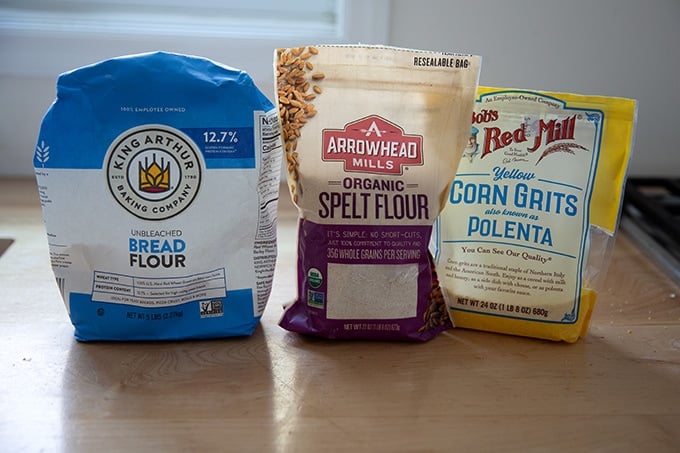
Before you begin, here are some flours you may want to pick up: high-protein flour (such as KAF’s bread flour) and spelt flour (for the dough itself) along with polenta or semolina flour (for the exterior).
This recipe starts by making a levain, a mix of ripe sourdough starter, water, and flour.
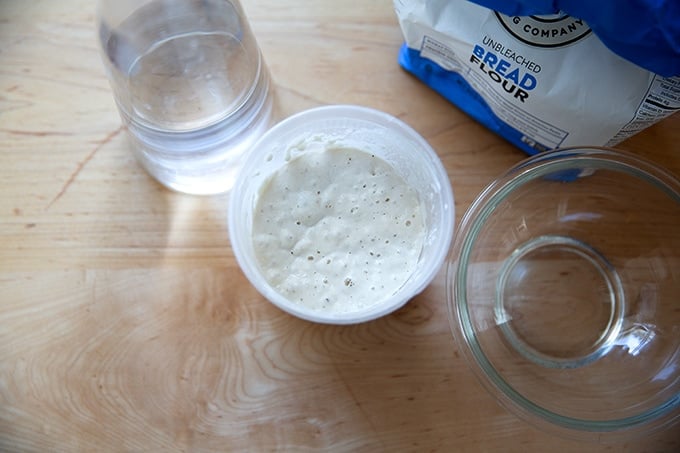
You’ll need 6 grams of ripe starter and 56 grams each flour and water.
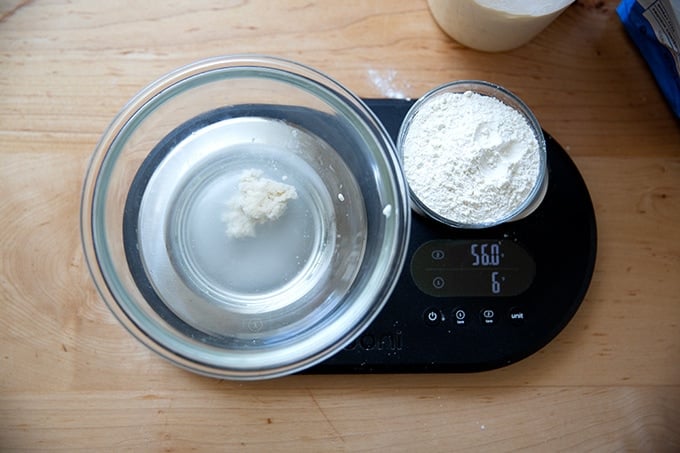
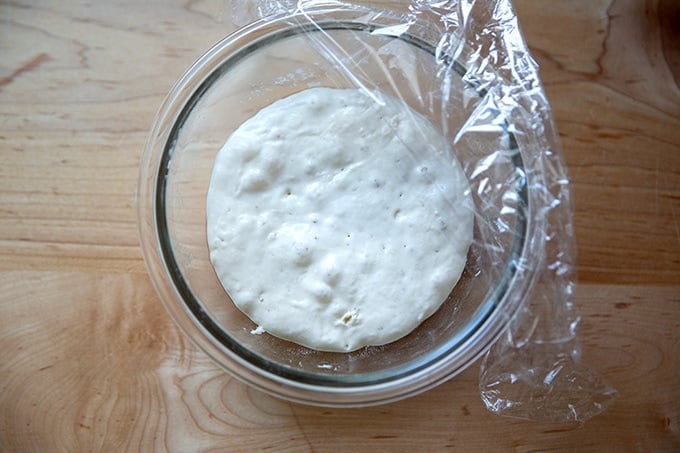
Mix together the flour, water, and starter in a bowl, cover it, and let it sit for 12 hours…
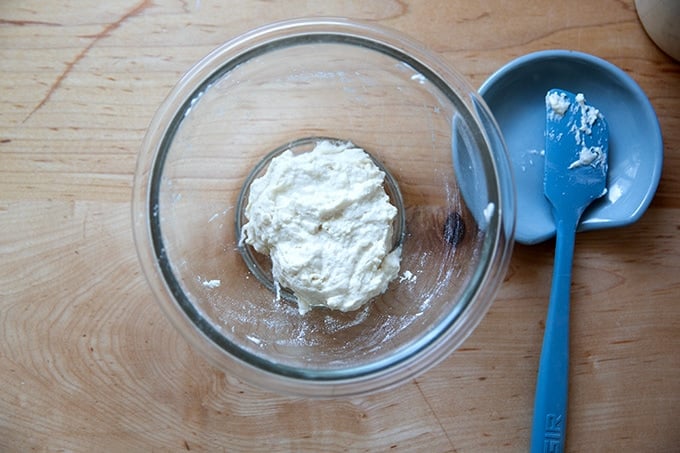
… or until is shows lots of signs of activity:
Gather the rest of your ingredients: water, milk, salt, sugar, butter, and flour.

This dough is made in a stand mixer, though you could knead it by hand if you don’t have one (see recipe box for details). First, combine all of the ingredients except the butter in the bowl of a stand mixer.
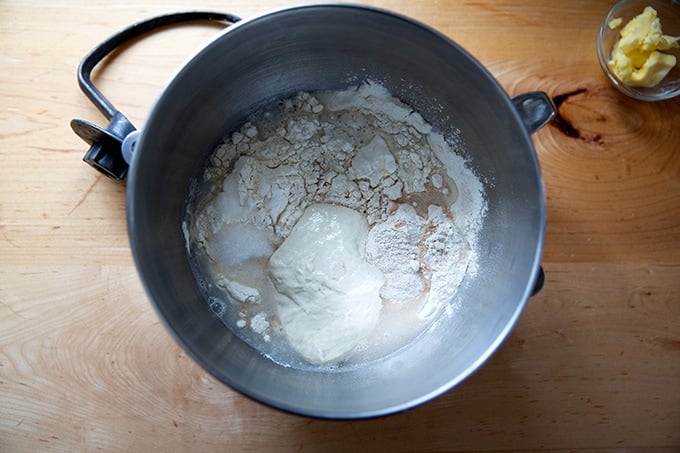
Mix on low speed for 1 to 2 minutes until combined. Increase the speed to medium and mix for 3 minutes until the dough begins to cling to the dough hook. Let the dough rest in the bowl for 10 minutes.
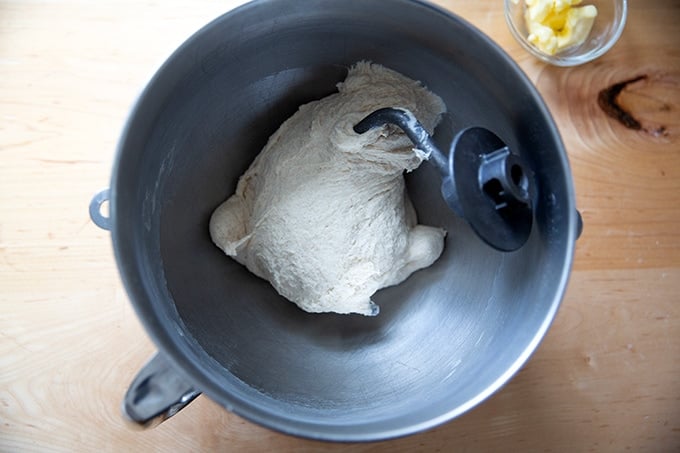
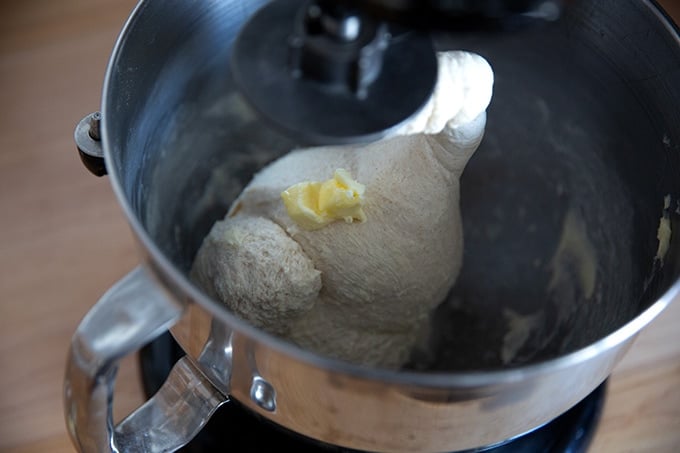
Add the butter, one pat at a time, until absorbed into the dough. Increase the speed to medium and mix for 1 to 2 minutes more until the dough smooths out and clings to the dough hook once again. The dough will be smooth and shiny.
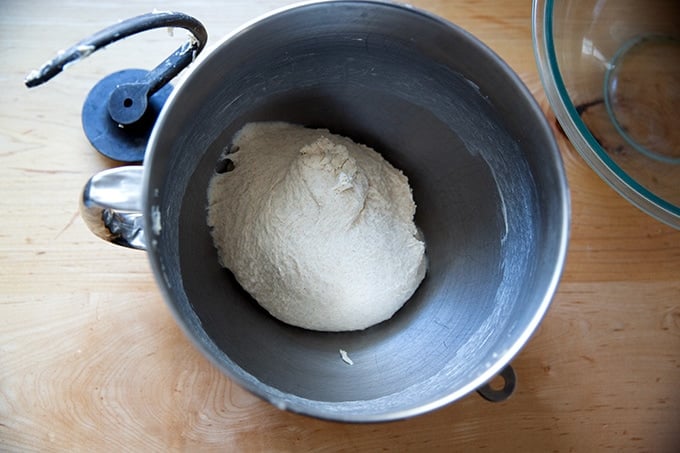
Stretch and fold: Let the dough rest for 30 minutes.
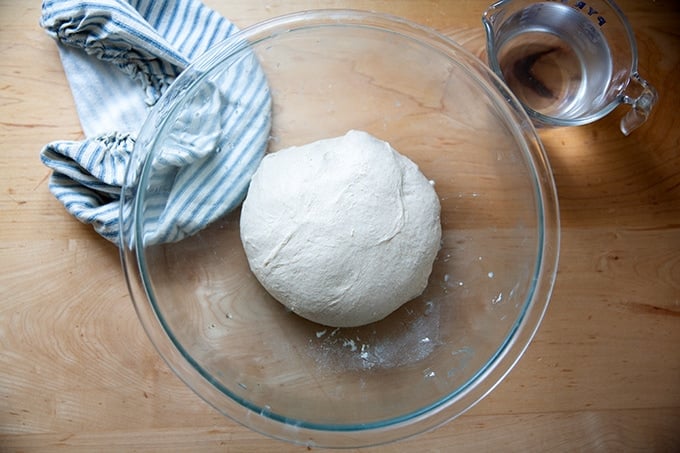
Using wet hands, grab one side of the dough and lift it up and over to the other side.
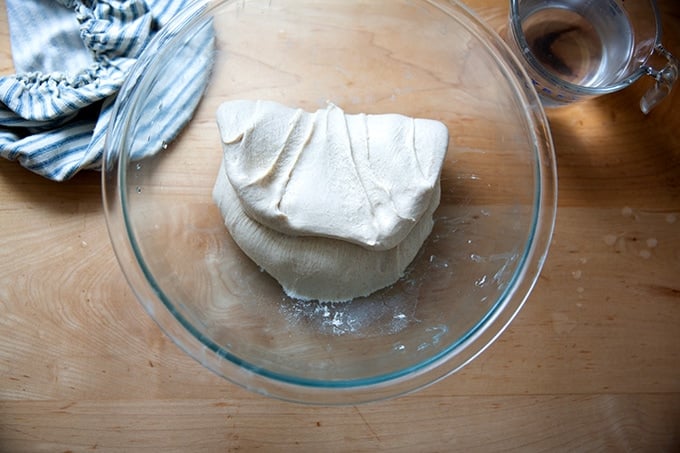
Rotate the bowl 180 degrees and repeat.
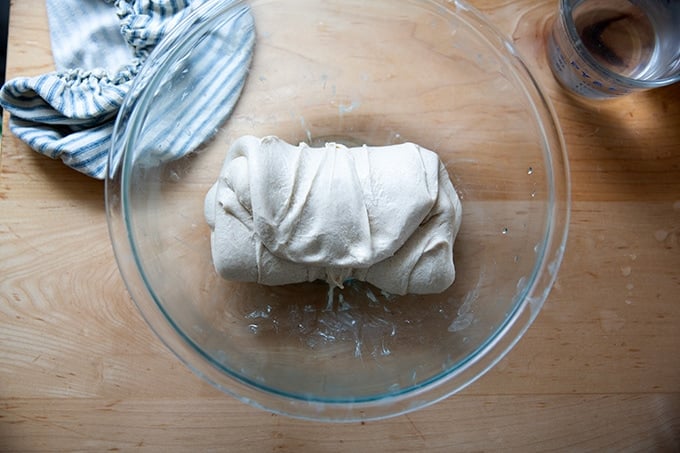
Then rotate the bowl a quarter turn and stretch and fold that side.
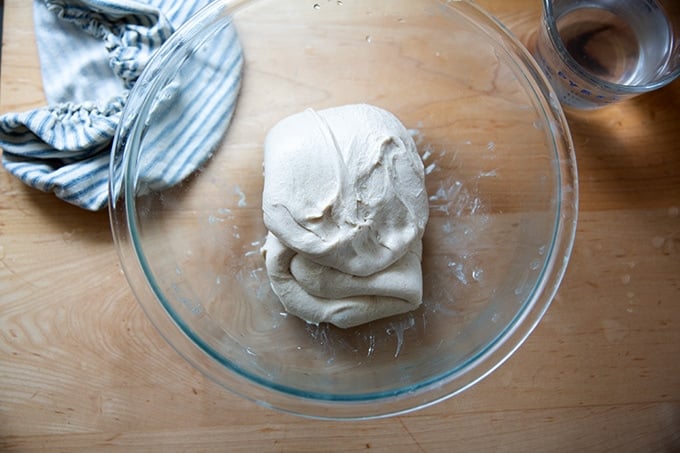
Rotate the bowl 180 degrees again and finish with a stretch and fold on the last side.
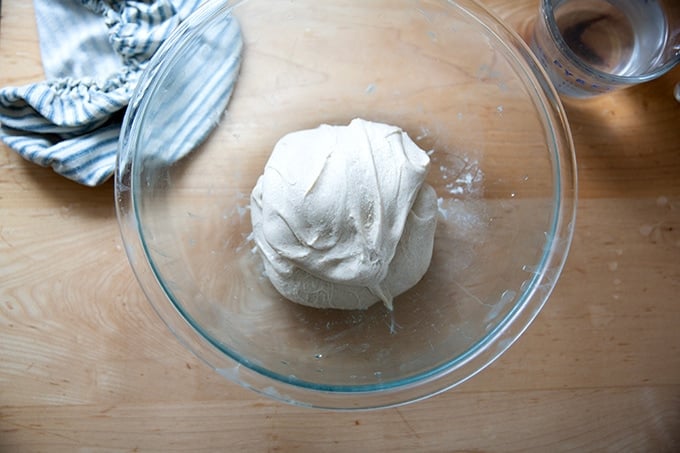
The dough should be folded up neatly. Cover the vessel, then repeat these folds every 30 minutes for a total of 3 sets of stretches and folds.
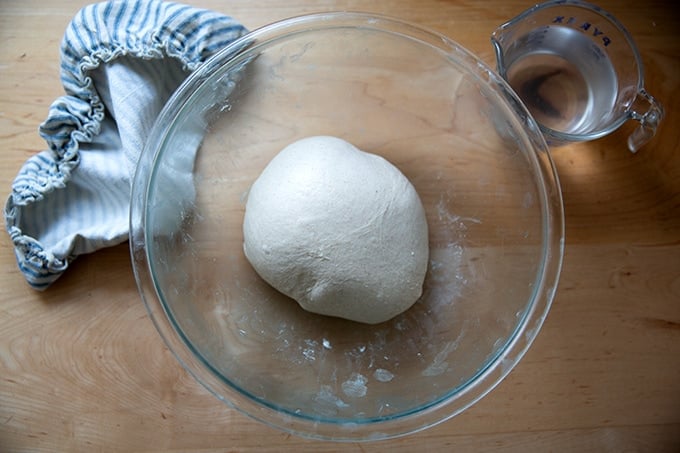
After the last set, cover the bowl and let the dough rest for the remainder of the bulk fermentation, about 2 hours (if your kitchen is 74ºF-76ºF) or longer if your kitchen is cooler. I transfer the dough to a straight-sided vessel for the bulk fermentation:
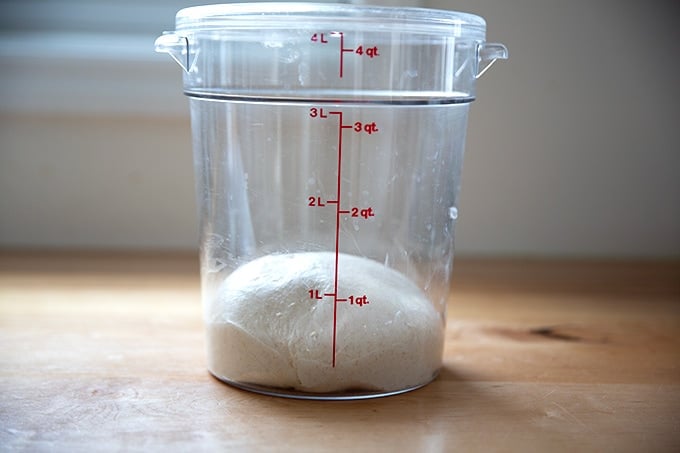
The bulk fermentation is complete when the dough has risen with domed edges. When determining when the bulk fermentation should end, Maurizio notes: “The amount of rise is less important than the fact that it has risen and looks alive and well aerated.”
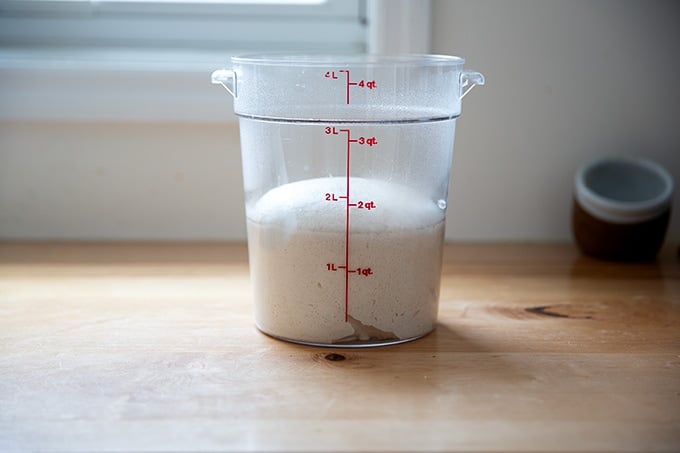
When the bulk fermentation is complete, turn the dough out onto a lightly floured work surface.
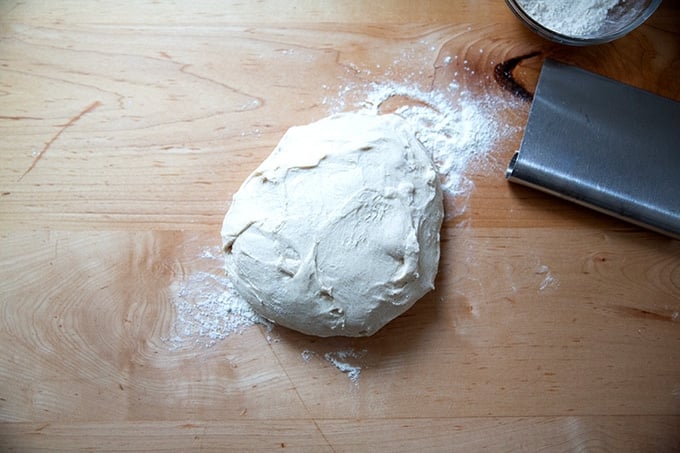
Divide the dough into 12 portions.

If you like to be precise, each portion should weigh 80 grams.
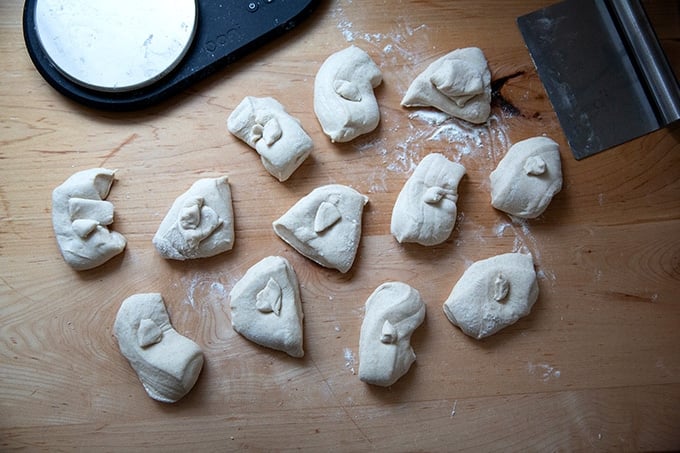
Ball up each portion.
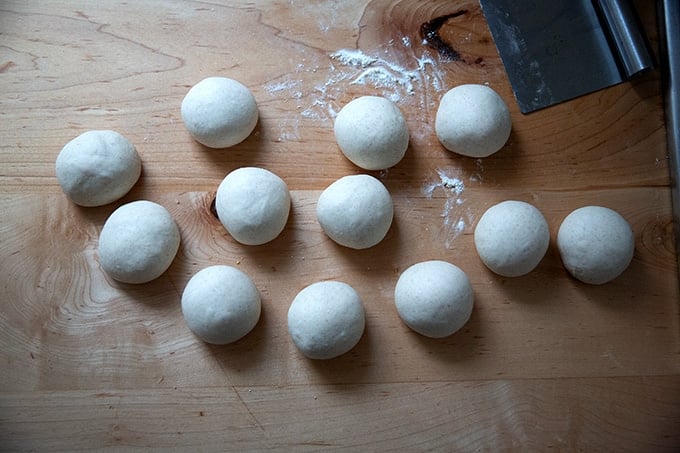
At this point, you’ll need a vessel for proofing. I love these lidded DoughMate proofing vessels, which I use for pizza dough as well. If you don’t have one, a 13×18-inch sheet pan will work just fine.
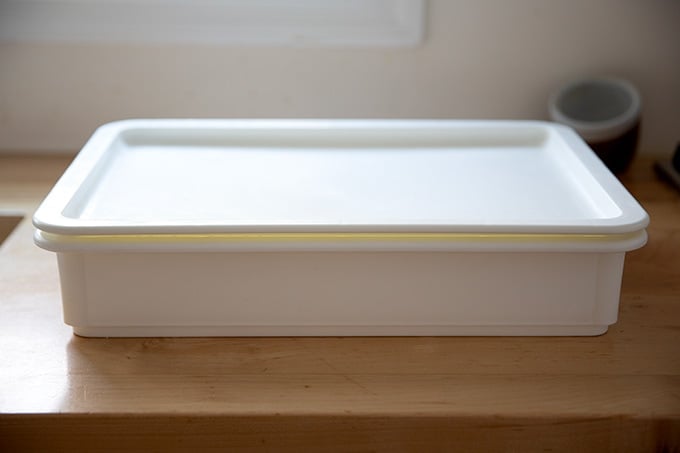
Dust the proofing vessel or a 13×18-inch sheet pan with semolina flour or cornmeal. Transfer the balls to the vessel, cover, then refrigerate overnight.
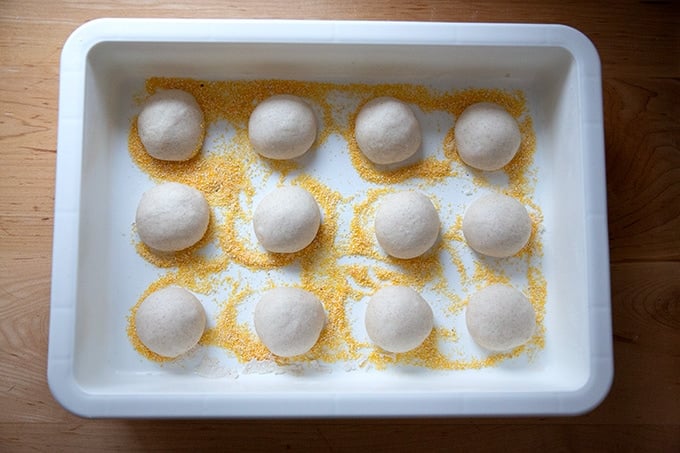
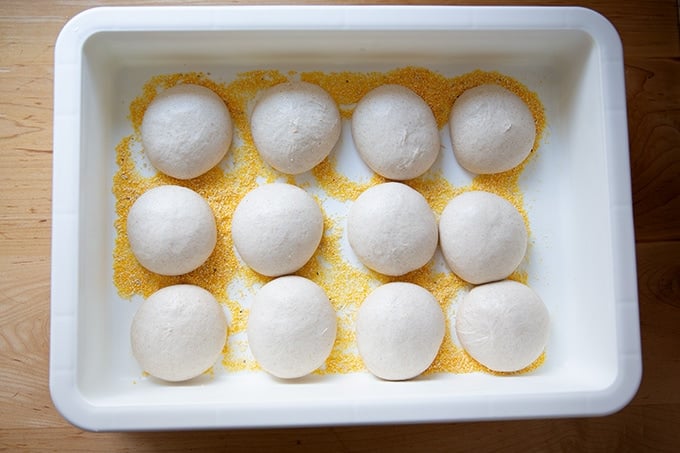
The following day, remove the vessel from the fridge and let the balls proof at room temperature for at least 3 hours or until they are very light to the touch.
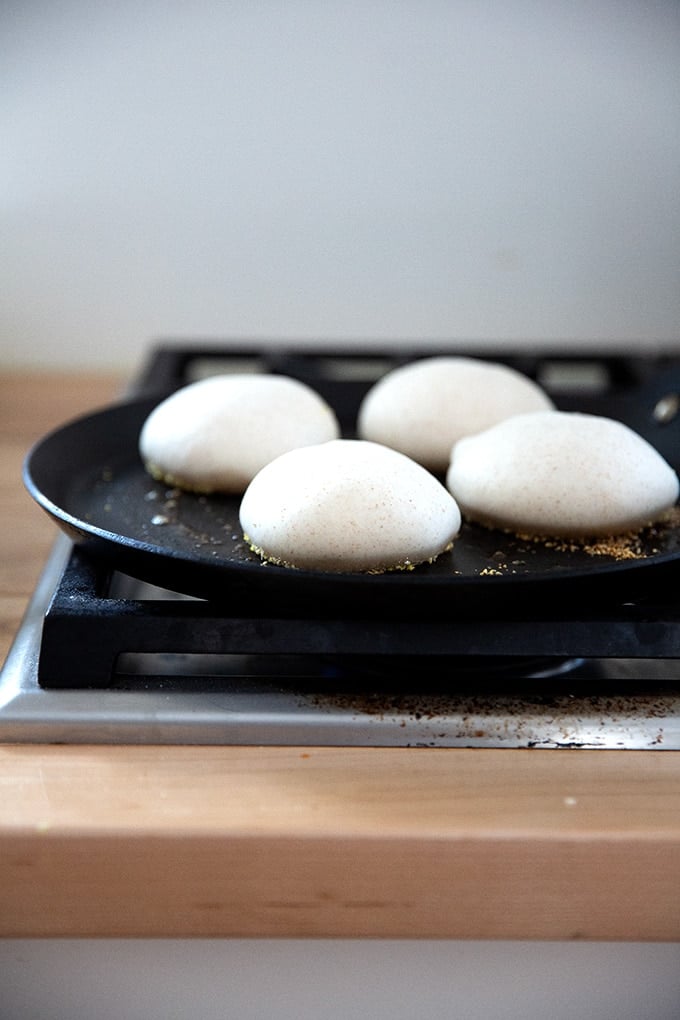
To cook, you’ll brown each side of the English muffin dough balls in a skillet on the stovetop.
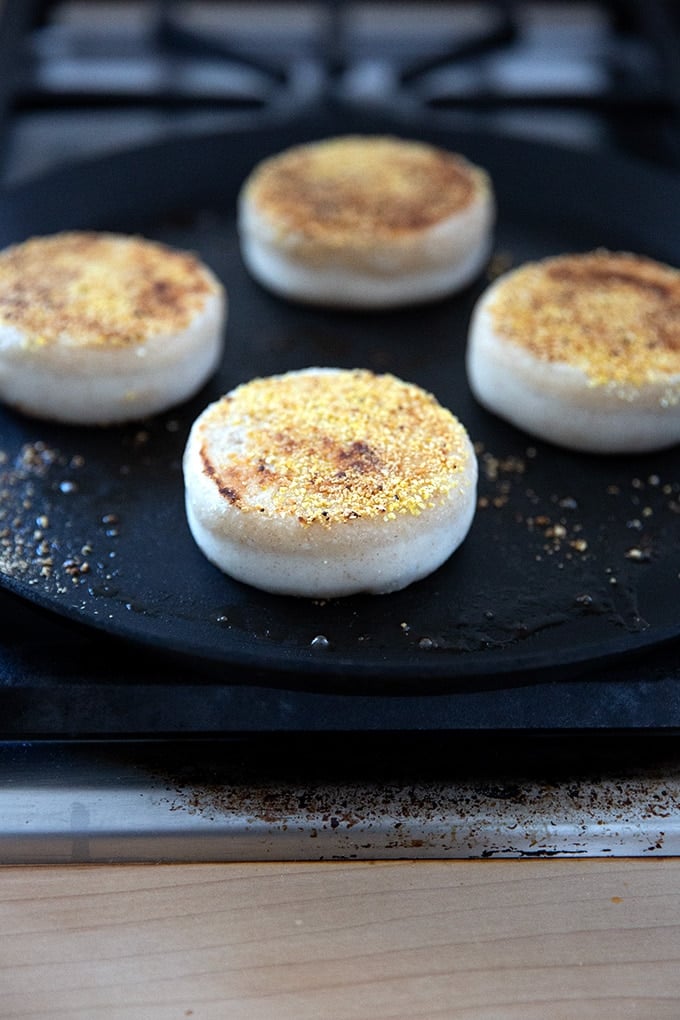
Then you’ll bake them for 15 minutes.
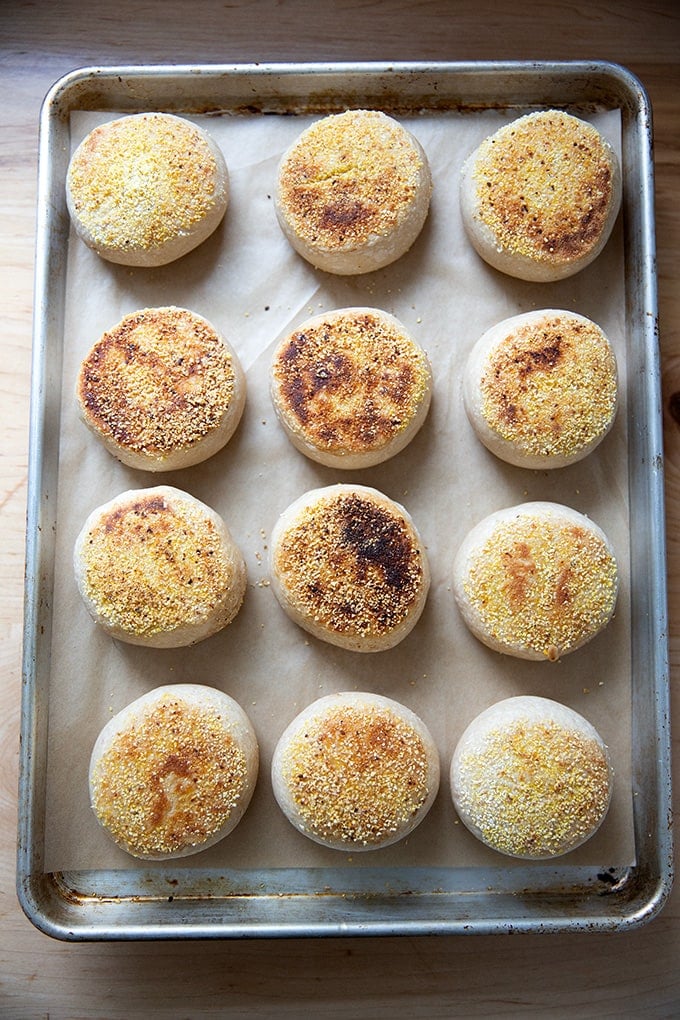
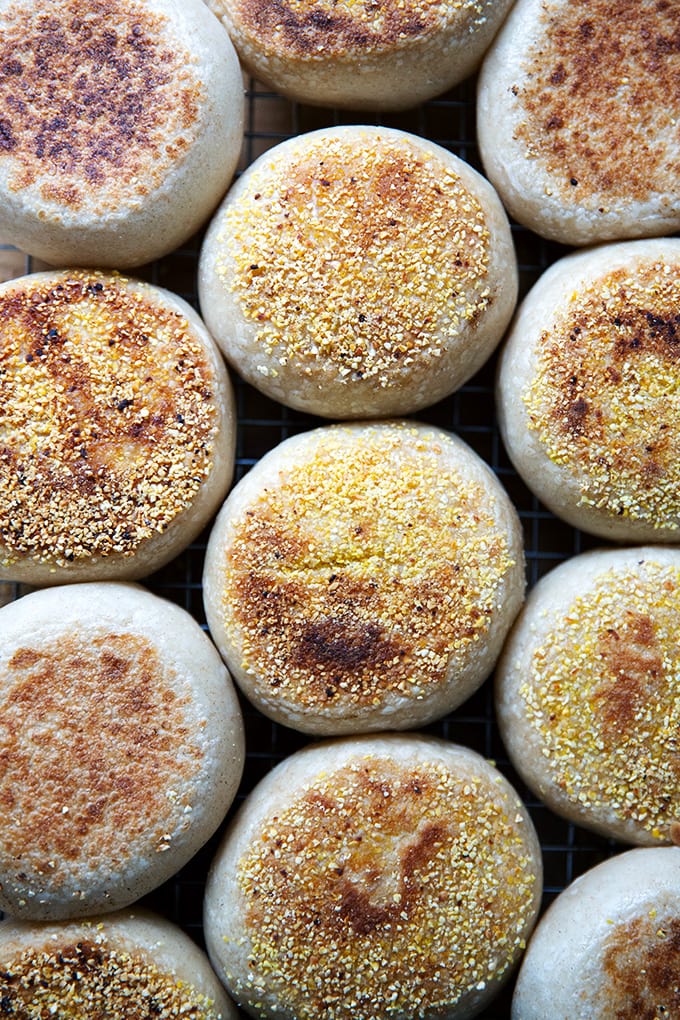

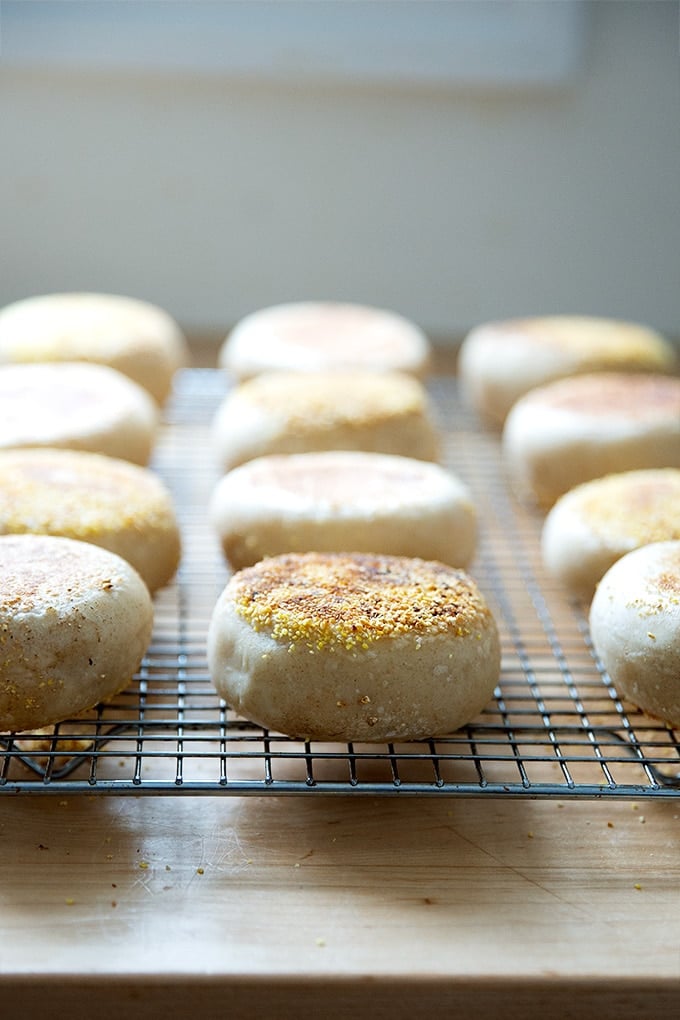
Let them cool for at least 30 minutes before halving and devouring…
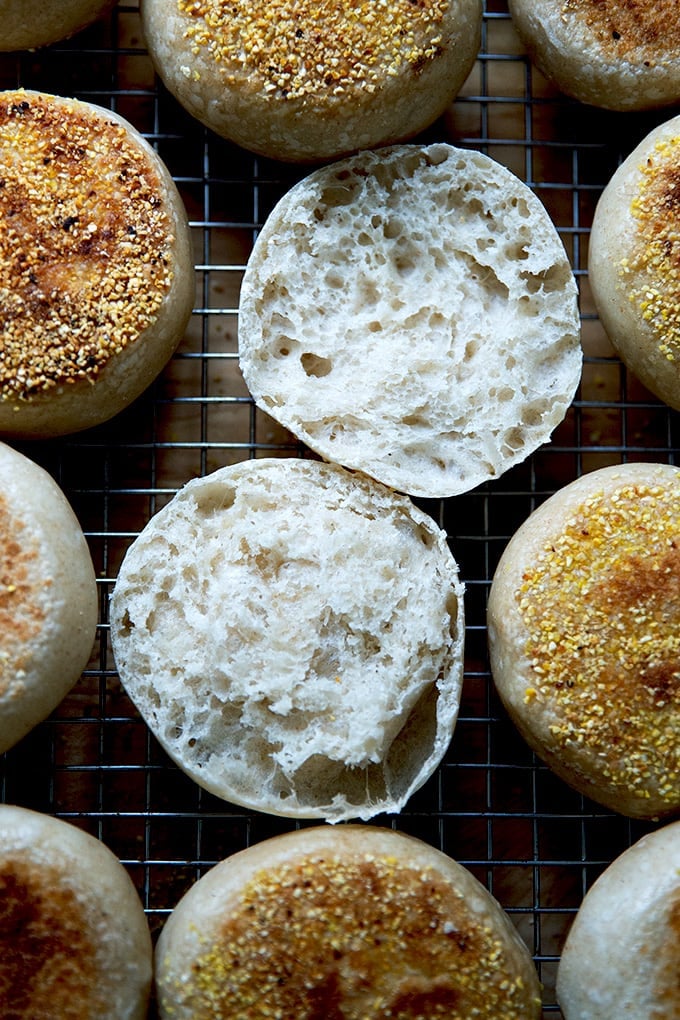
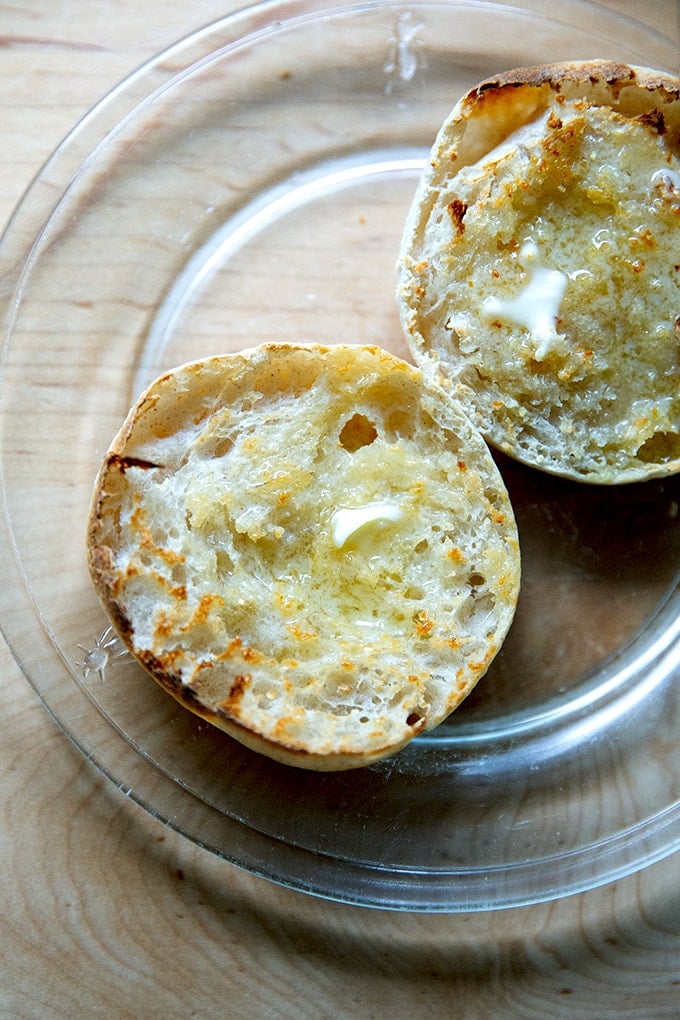
… or, if you have the patience, toasting and slathering with butter.

Homemade Sourdough English Muffins
- Total Time: 48 hours 45 minutes
- Yield: 12 1x
Description
Light and airy with the loveliest chew, these sourdough English muffins are surprisingly easy to make. They do not require an autolyse, nor do they require English muffin rings for cooking. They are irresistible toasted and slathered with butter or jam.
From Maurizio Leo’s The Perfect Loaf
There are no volume measurements for this recipe, so you’ll need a digital scale.
Notes:
Water Temperature: Maurizio gives very specific temperatures of the water. This is all in an effort to allow the dough to ferment properly. For the levain, the specific temperature of the water is 78ºF. For the dough itself, the temperature of the water you should use will vary depending on the temperature of your kitchen, and Maurizio provides a way to calculate this figure as well as a handy chart (if you hate math) in his book. When my kitchen is 68ºF, I should use water that is roughly 98ºF.
Ingredients
For the levain:
- 56 grams high-protein white flour (12.7 to 14% protein)
- 56 grams water, roughly 78ºF, see notes above
- 6 grams ripe sourdough starter
For the English muffins:
- 33 grams unsalted butter
- 437 grams high-protein white flour (12.7 to 14% protein), such as bread flour
- 55 grams whole spelt flour
- 55 grams whole or 2% milk
- 9 grams sugar
- 283 grams water, roughly 98ºF, see notes above
- 10 grams fine sea salt or kosher salt
- 118 grams levain
Instructions
- Make the levain: In a medium jar or small bowl, mix the levain ingredients until well incorporated (this liquid levain will feel quite loose) and loosely cover. Store on the counter for 12 hours.
- After the 12 hours, check the levain: it should show signs of readiness: well aerated, risen, bubbly on top and at the sides, and with a sour aroma. If the levain is not showing these signs, let it ferment 1 hour more and check again.
- Cut the butter into ½-inch thick pats. Place the pats on a plate on the counter to warm to room temperature.
- Mix the dough: In the bowl of a stand mixer fitted with the dough hook, add the flours, milk, sugar, water, salt, and ripe levain. Mix on low speed for 1 to 2 minutes until combined. Increase the speed to medium and mix for 3 minutes until the dough begins to cling to the dough hook. Let the dough rest in the bowl for 10 minutes. (To mix by hand: In a large bowl, whisk together the flours, sugar, and salt. Add the water, milk, and levain and stir with a spatula until you have a sticky dough ball. Turn the dough out onto a lightly floured work surface, then knead by hand for 2 to 3 minutes until the dough comes together in a cohesive ball and feels tacky but not sticky. Return the dough to the bowl and let it rest for 10 minutes.)
- Gently press a butter pat with your finger: it should easily indent but not be wet or melted. If the butter is too warm, place it in the freezer for 5 minutes. If it is too firm, microwave it for 10 seconds, then check it again.
- With the mixer on low speed, add the butter, one pat at a time, until absorbed into the dough, scraping down the sides of the bowl and the paddle as needed. Continue until all the butter is added, 2 to 3 minutes. Increase the speed to medium and mix for 1 to 2 minutes more until the dough smooths out and clings to the dough hook once again. The dough will be smooth and shiny. Transfer to a container for the bulk fermentation. (If you are hand-kneading: Turn the dough out onto a lightly floured work surface, sprinkle the butter over the dough, then knead the dough for 2 to 3 minutes, using flour only as kneaded, until the butter is incorporated and the dough is smooth and shiny. Transfer the dough to a container for the bulk fermentation.)
- Bulk fermentation: Let the dough rest for 30 minutes. Using wet hands, grab one side of the dough and lift it up and over to the other side. Rotate the bowl 180 degrees and repeat. Then rotate the bowl a quarter turn and stretch and fold that side. Rotate the bowl 180 degrees again and finish with a stretch and fold on the last side. The dough should be folded up neatly. Cover the vessel, then repeat these folds every 30 minutes for a total of 3 sets of stretches and folds. After the last set, cover the bowl and let the dough rest for the remainder of the bulk fermentation, roughly 2 hours if your kitchen is warm, longer if it is cool (3 to 4 hours or longer if necessary). End the bulk fermentation when the dough has risen, domed, and looks alive and well aerated. I tend to end the bulk fermentation when the dough has increased in volume by 50-75%.
- Prepare the proofing pan: Liberally dust a 13 x 18-inch half-sheet pan (or a lidded DoughMate) with semolina flour or cornmeal (or white flour) and set aside.
- Uncover the container and lightly dust the top of the dough and a work surface with flour. Gently scrape the dough onto the floured work surface and use your bench knife to divide it into 12 pieces roughly 80 grams each.
- Using a lightly floured hand and your bench scraper, shape each piece into a taut ball and place it on the sheet pan; you should be able to comfortably fit all 12 pieces with space in between. Place the sheet pan inside a reusable plastic bag and seal. Alternatively, wrap the pan well with plastic wrap.
- Cold proof: Place the sheet pan in the refrigerator overnight.
- Warm proof: The next day, remove the pan from the fridge and let proof at room temperature (74ºF to 76ºF) for at least 3 hours. (Because my kitchen is cool (68ºF), this room temperature proof takes longer: more like 4 to 5 hours.) The dough is ready when it is very soft and puffed up — it should feel extremely delicate. (For the lightest and most tenderest muffins, it’s essential to give this dough plenty of time to finish proofing.) If it feels dense or tight, let it proof 30 minutes more and check again.
- Cook the English muffins: Place an oven rack in the middle position and preheat the oven to 350ºF. Line a 13 x 18-inch half-sheet pan with parchment paper and set it next to the stove.
- Place a heavy cast-iron skillet or other large skillet over medium-low heat (or preheat a griddle). Lightly grease the skillet with clarified (or not) butter. Using a flat spatula, gently transfer 2 to 4 dough rounds to the skillet to cook until the bottoms are deep brown, 2 to 3 minutes. Flip and cook for another 2 to 3 minutes, or until the other sides are deep brown. Transfer the muffins to the prepared sheet pan and repeat with the remaining dough rounds, wiping out and re-greasing the pan again with butter between each batch.
- Transfer the pan to the oven and bake for 15 minutes. When done, the muffins will have colored a little more at the edges, but they won’t be completely browned.
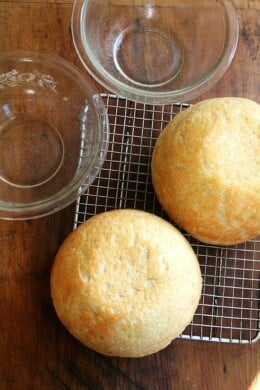
- Let the muffins cool on a wire rack for at least 30 minutes. These will keep for 3 to 4 days on the counter, covered. For longer storage, transfer to a zip-top plastic freezer bag once completely cooled and freeze for up to 3 months.
- Prep Time: 48 hours
- Cook Time: 45 minutes
- Category: Bread
- Method: Stovetop, Oven
- Cuisine: American
This post may contain affiliate links. Please read my disclosure policy.









89 Comments on “Homemade Sourdough English Muffins”
Hi ! I made these recently and they were so delicious. I want to make a double batch but I don’t have space in my fridge to store big sheet pans overnight. Is there another way to cold proof without taking to space and then bake the next day? Will I still get the nooks and crannies if I let the dough sit in the fridge, then shape and warm proof the next day on the counter? Thanks!
I do think you will get the same nooks and crannies if you cold ferment your dough in the fridge; then shape, proof, and bake the following day. As long as you don’t rush the proof, I think they’ll be great.
I never shape them before cold proofing as it takes up so much space and I have found them come out equally lovely when shaped cold and allowed a long final proof after shaping.
Great to hear! Thanks for sharing this 🙂
Hi! Can you use whole wheat flour instead of bread flour? What would be the result? Thanks!
Hi! And yes, you can, just keep in mind the texture of the finished English muffins won’t be as light and airy. Still tasty! Just potentially denser, heavier.
Hi! I am fairly new to sourdough baking. I have noticed that most recipes bulk ferment, cold retard, and then either immediately bake or rest for a short time, such as 30 min before baking, but this recipe rests for 3 hours. I absolutely trust both you and Maurizio Leo, so I am sure this is for good reason, but I am wondering if you might be able to explain why, as I am quite curious!
Hi! The long final proof at room temperature helps create a lighter, airier crumb.
Thanks!
Hi, Ali. I enjoy making many of your sourdough recipes repeatedly and just tackled this one for the first time yesterday.
Getting just a little carried away with my experimentation these days, I substituted white whole wheat flour for the spelt (by request,) may have cut the initial bulk a little short of the 50% mark due to time available, then on to cold proof on a bagged baking sheet. Come morning, I let the warm proof go roughly 5 hours at 72 deg., could have done more, I think. Again, due to time, I adapted a technique from another recipe I’ve used successfully and baked the muffins at 12-13 min. per side at 425 deg., skipping the skillet (which I would normally do, but couldn’t compete for the stove this time.)
Long story short, they finished near-perfectly and my lady says she’ll be happy if I make these any and every time possible, including a freezer supply. They make the Eggs Benedict I had yesterday morning at a local French restaurant seem particularly lame, for how great these shape, open, toast and of course, taste.
Baguettes will be next . . . . . Thanks once again, I follow your Bread, Toast, Crumbs book, emails and website religiously while referring others (mostly old knuckle-draggers) to you constantly.
I’m so happy to read all of this. Thanks so much for writing and sharing all of these notes — it’s encouraging to others to hear that the timeline is forgiving and can be tailored to your needs. You have me craving Eggs Benedict! Thank you for your kind words… means a lot 💕💕💕
I made these for the third time this weekend. Great recipe and my family devoured them! I messed up in the mixing stage and mixed my (VERY) softened butter in at the same time as everything else, and they came out fine (in case anyone was wondering). My husband keeps raving about these, so I guess I’ll have to make them again soon!
Great to hear, Krysta! Thanks so much for writing and sharing your notes… very encouraging for others 🙂
Your recipes are as foolproof as they come! I can trust that things are going to turn out! Today I made these sourdough English muffins, along with your other recipes – Joanne Chang’s egg soufflé bake and the Little Gems salad. They were all so delicious! Thank you!
So nice to hear this, Hannah! Thanks so much for writing and sharing all of this 🙂
Hi Ali, I have a cow’s milk dairy allergy and I was wondering if it would be possible to make these with an alternate plant based milk and butter substitute or is there something in the reaction of the ingredients as defined in the recipe to make it work?
Hi Rikki! I think oat milk would work great here as would any plant-based butter substitute. Go for it 🙂
What is the purpose of making a levain instead of using all started? I fed my starter like 60 of each in prep for this recipe cuz I don’t read directions first, lol. Still, curious question. The levain instructions are same same for feeding starter… though thte starter I had left was more than 6 grams
I think you could get away with using active, bubbly starter in place of the levain. The author of the recipe, Maurizio Leo, prefers using a levain with many of his bread recipes. I think it’s just a matter of preference. I think using a levain potentially tones down the sourdough flavor.
Woah. Fantastic recipe and pretty forgiving I’ve found. didn’t have spelt first batch, mismeasured ingredients and had to eyeball it for second batch. Both batches better than others I’ve tried and waaaay above anything store bought. Had to stop myself from eating multiple. Also tried leaving half the batch for extra 16 hour cold proof and didn’t seem like a bonus. Next time I’ll do it like I’m supposed to! Thanks!
Was surprised that bread toast crumb had no sourdough recipes. Next cookbook?
Great to hear, Lorna! Thanks for writing and sharing your notes. Yeah, Bread Toast Crumbs came out just before the sourdough boom. I do have sourdough recipes in my pizza cookbook, Pizza Night 🙂