 →
→ 

Lemony Buttermilk Currant Scones
 By Alexandra Stafford
—
Last Updated: 08/21/2025
By Alexandra Stafford
—
Last Updated: 08/21/2025
This post may contain affiliate links. Please read my disclosure policy.
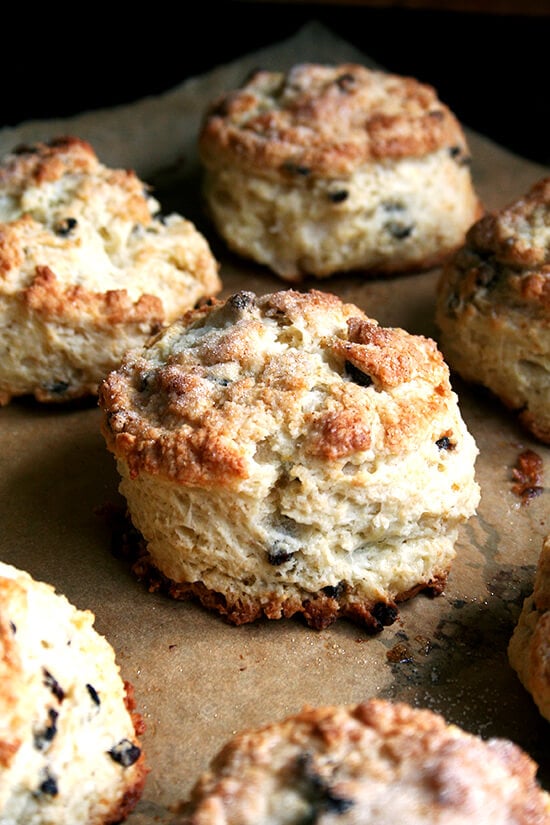
Flaky, buttery, lemony, and nicely sweet, these currant scones are perfection. If you need a reason to break out the good Irish butter, look no further!
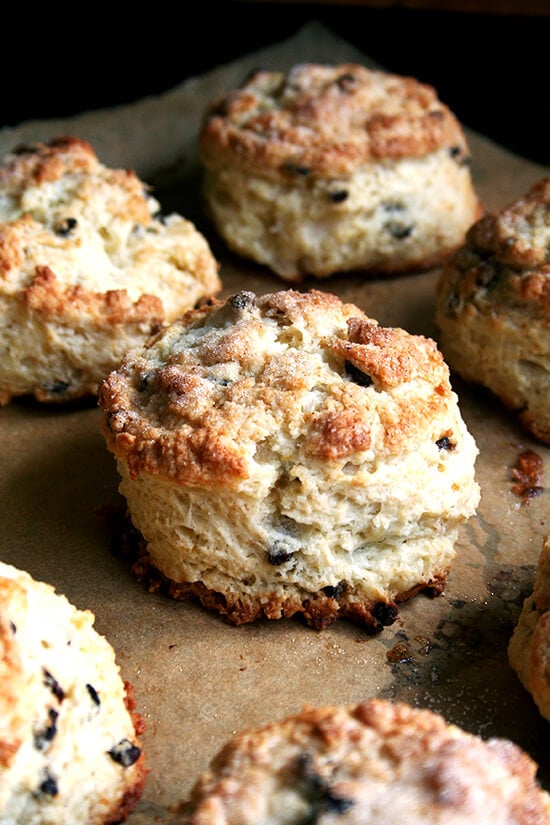
I’m preparing for Thanksgiving and for my sole visitor, my father, who loves a proper English scone.
Unfortunately, I am fairly certain these currant scones are not proper by any British standards. And I know that after one bite, my father will in fact tell me that what I have served him is not a proper British scon. And I have no doubt he’ll then proceed to devour two or three, slathering each with butter and jam, uttering mumbles of approval all along the way.
I can’t wait.
About these scones: when I find a recipe I like, I tend to stick with it. Tartine’s buttermilk scone recipe is the one I use year-round, studded with berries in the summer and currants in the winter. The dough freezes beautifully, too, so I often freeze unbaked scones for a future morning.
What to serve with currant scones?
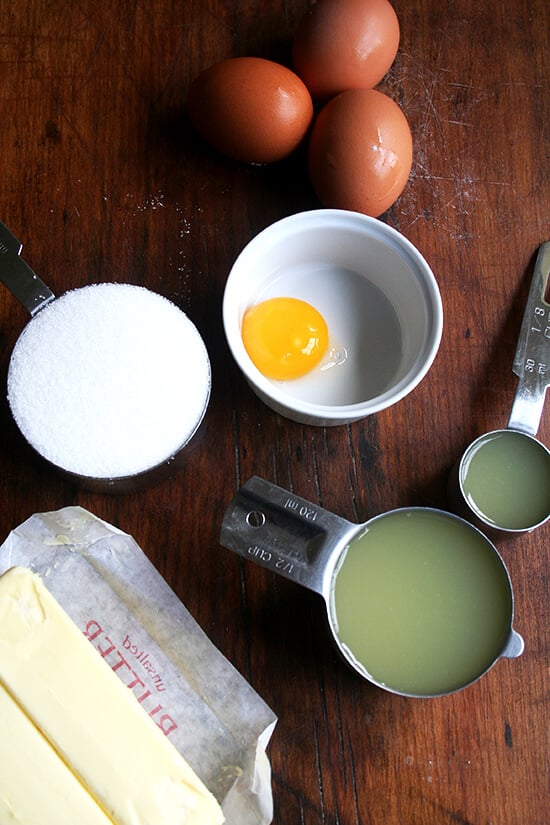
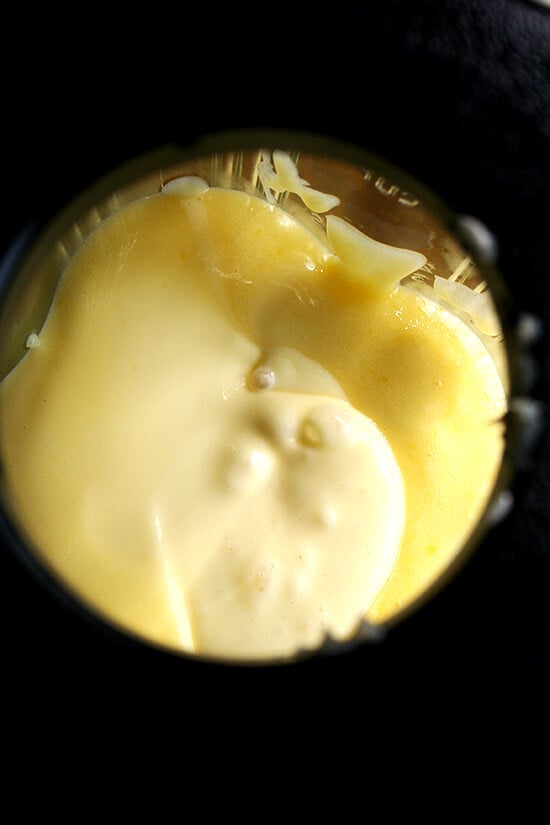
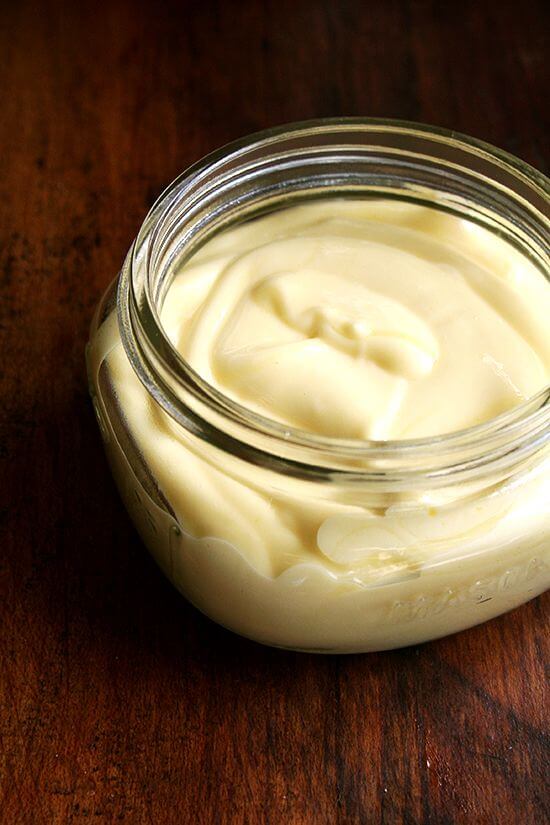
Good Irish butter is an obvious choice, but I’ve been loving them with Tartine’s lemon cream, which is luscious and bright and a perfect complement to the slightly sweet scones. The recipe is linked in the recipe box below.
Note: these scones certainly don’t need anything as spectacular as homemade lemon cream — they honestly don’t even need a dab of butter — but if you’re feeling the gilding-the-lily spirit that is the holiday season, then go for it.
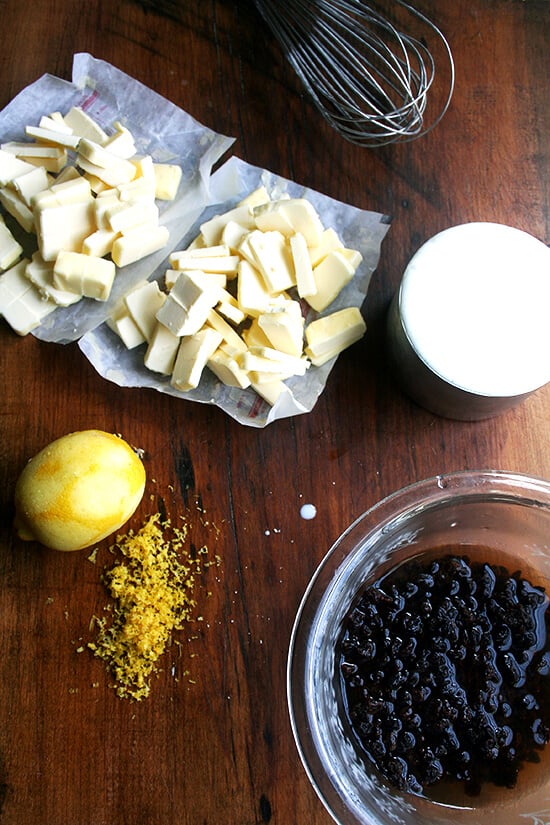

Lemon cream ingredients:
Lemony Buttermilk Currant Scones
- Total Time: 1 hour
- Yield: 6 to 8 1x
Description
Adapted from Tartine’s most delicious recipe.
Find the Lemon Cream recipe here.
UPDATE: I recently re-wrote the recipe as a half recipe, because I found myself always making the half recipe, which yields a more manageable amount (6 to 8 as opposed to 16-18).
As always, for best results, use a digital scale to measure.
Sugar: You can sprinkle the scones with granulated sugar before baking, but turbinado sugar makes for an especially tasty and pretty crust.
Salt: If you are using Morton Kosher salt or fine sea salt, use half as much by volume or the same amount by weight.
To freeze: After you place the scones on a sheet pan, transfer them to the freezer. Freeze until solid; then transfer the scones to an airtight container or bag. When you are ready to bake, there’s no need to thaw them. Bake as directed below straight from the freezer. (Brust with butter and sprinkle with sugar before baking.) The scones shouldn’t take much longer to bake from frozen, but keep an eye on them at the 20-minute mark.
To make your own buttermilk:
- Place 1 tablespoon of vinegar or lemon juice in a liquid measuring cup.
- Fill cup with milk (2% or whole is best) until it reaches the 1-cup line.
- Let stand for five minutes. Use as directed.
Ingredients
- 1/3 cup (50 g) Zante currants
- 1/4 cup (55 g) sugar
- zest of one lemon
- 2 1/3 cups (304 g) all-purpose flour
- 1.5 teaspoons (5 g) baking powder
- 0.5 teaspoon (3 g) baking soda
- 1.5 teaspoons (6 g) kosher salt, see notes above
- 1/2 cup plus 1 tablespoon (130 g) cold, unsalted butter (or salted… I always use salted)
- 3/4 to 1 cup (180 to 240 g) buttermilk
- 1 to 1.5 tablespoons melted butter
- sugar for sprinkling: turbinado makes for an especially pretty and tasty crust, see notes above
Instructions
- Preheat the oven to 400ºF. Line a rimmed baking sheet with parchment paper.
- If your currants are very dry, place them in a small bowl, cover them with warm water, and set aside for about 10 minutes until the currants are plumped. Drain well. If your currants are moist out of the container, you can skip this step — I’ve been using Sun-Maid Zante Currants, which are very moist, so I’ve been skipping this step.
- In a large bowl, place the sugar. Zest the lemon into the sugar, then use your hands to rub the zest into the sugar — this releases the oils in the zest and heightens the lemon flavor in the finished scones.
- Add the flour, baking powder, baking soda, and salt, and whisk to combine. Add the currants and whisk again.
- Grate the butter using a box grater, then scatter it over the dry ingredients. Toss gently with your hands to disperse the butter evenly throughout the dry ingredients. Alternatively, cut the butter into 1/2 slices, then use a pastry blender or the back of a fork to cut the butter into the dry ingredients.
- Add the buttermilk, starting with 3/4 cup (180 grams) and mix gently with a wooden spoon or spatula until the dough holds together. If the mixture seems dry, add more buttermilk by the tablespoon until the dough comes together (I consistently need 3/4 cup + 1-2 tablespoons of buttermilk total but I have used a full cup of buttermilk with success, too). If necessary, knead the dough gently with your hands to help it come together.
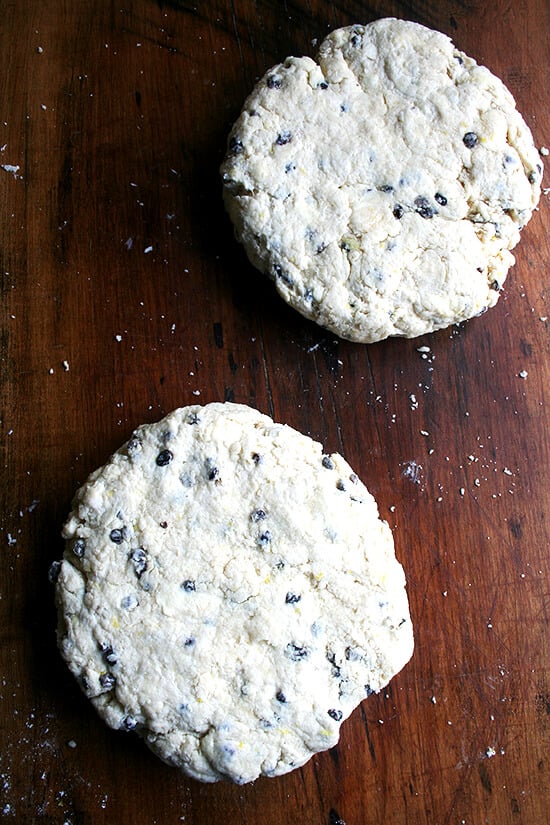
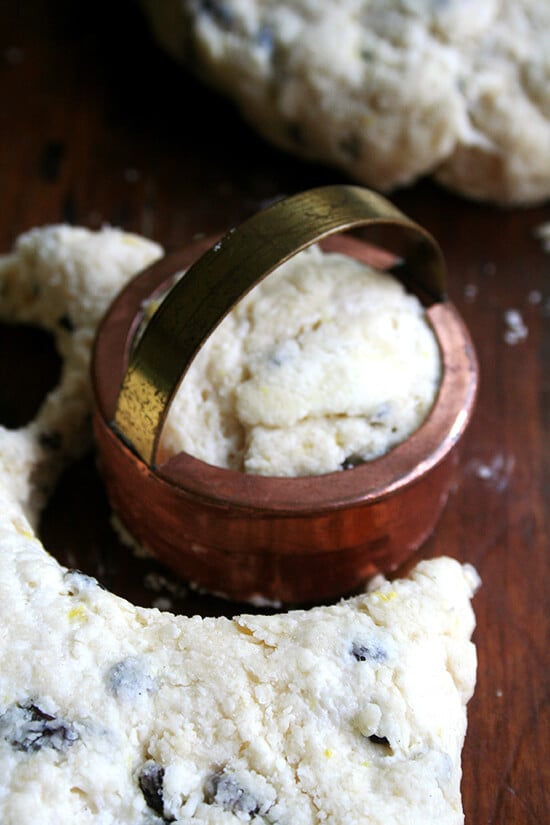
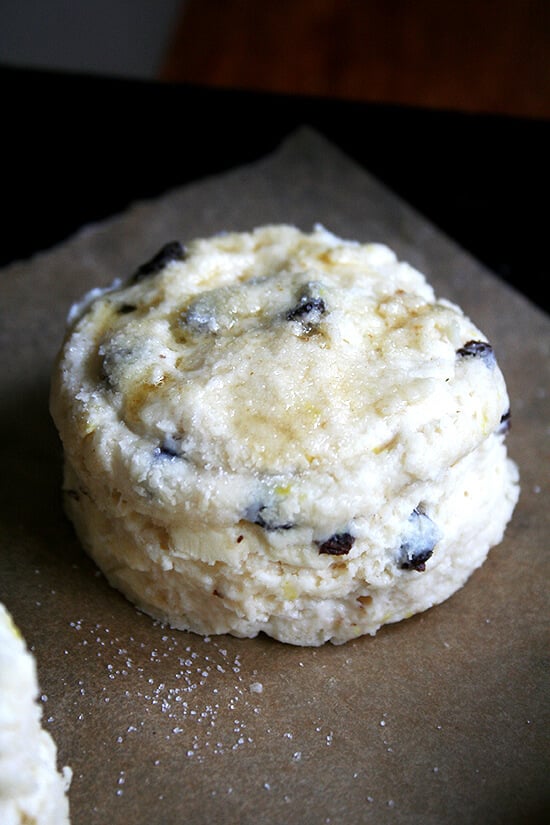
- Dust your work surface with flour and turn the dough out onto it. Using your hands, pat the dough into roughly a 7-inch circle about 1½ inches thick. (Note: At this point, you can transfer the scone dough to the fridge in an airtight bag until you are ready to bake (for as long as 24 hours)). Brush the top with melted butter. Sprinkle with sugar. Cut the circle into 6 to 8 triangles, then transfer them to the prepared sheet pan. If time permits, chill the scones for 20 minutes. You also can freeze the scones at this point — see notes above.
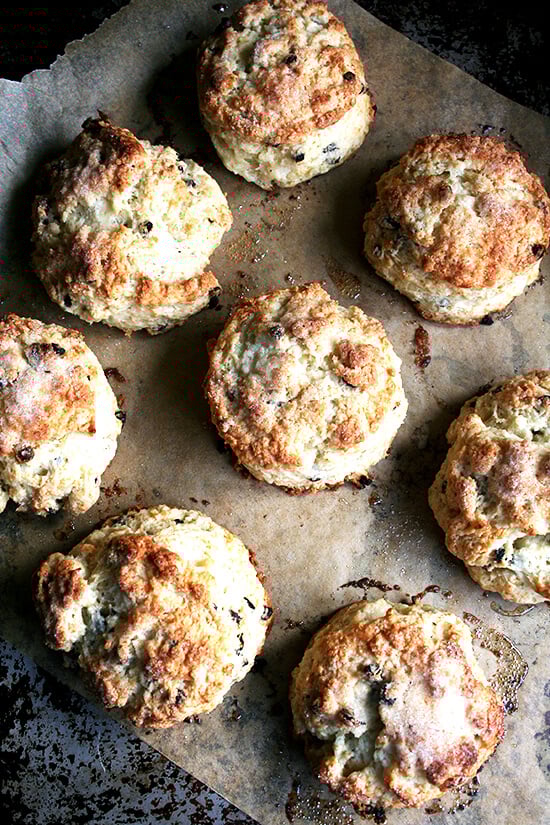
- I like to place the pan on another rimmed baking sheet because often the bottom of my scones burn, but if you don’t have issues with your baking sheets, just use one sheet. Transfer to the oven and bake until the tops of the scones are lightly browned, about 20 minutes.
- Remove from the oven, let cool briefly, then serve with butter, lemon cream, clotted cream, jam or nothing at all.
- Prep Time: 25 minutes
- Cook Time: 20 minutes
- Category: Breakfast
- Method: Oven
- Cuisine: American
This post may contain affiliate links. Please read my disclosure policy.






133 Comments on “Lemony Buttermilk Currant Scones”
I made them this morning and swapped out the currants for dried blueberries since it is what I had on hand. They turned out fantastic. But I am curious since the updated recipe says to cut them into wedges but the photos show them cut out with a biscuit cutter. I know that scones can be done either way. But the photos don’t match the directions. Just curious.
Great to hear, Mia! I do triangles now… I just find it easier… no re-rolling the scraps and cutting again, etc.
Great tasing scones! But mine were a bit ‘rubbery’ textured. How can I make them more flaky?
Hi! Are you using a scale to measure? What type of flour are you using? Do you think it’s possible you overworked the dough a bit?
I used King Arthur All Purpose White Flour. I may have over worked it. I wonder if too much liquid or chilling before baking could impact the consistency?
Thanks
I don’t think chilling could have impacted the consistency. Possibly too much liquid. Did you use a scale to measure?
Yes I used a scale. I’ll give it another go with less working the dough and see what happens!
Thanks
Great, re scale 🙂 OK, I hope your next attempt is more successful!
My favorite scone recipe! My English friend and I delighted in their flavor, texture and moistness over afternoon tea. I however would love to incorporate some sourdough starter in this recipe but am unsure how to do it. A hint or two please?
Great to hear! Thanks for writing. I have to be honest, I have not used sourdough discard in scones… I tend to use it in recipes where there is both flour and water. Here is my collection of discard recipes: https://vector-hatch.live/category/recipe/bread/sourdough-discard-recipes/%3C/a%3E%3C/p%3E
For this recipe, you would have to cut back both the buttermilk and the flour, depending on how much discard you want to use. Scones are such a delicate balance of flour, butter and liquid, and I think it might take some trial and error to figure out how much discard you can use in place of the other ingredients without messing with the flaky, buttery texture of the finished scone.
I LOVE scones and these sound wonderful. I would appreciate knowing where to buy real currants (not Zante currants/raisins).
I think you’d probably find them only at farmers’ markets or specialty markets when they are in season. Fresh currants are in season typically June through August in the Northern Hemisphere.