 →
→ 

My Mother’s Peasant Bread: The Best Easiest Bread You Will Ever Make
 By Alexandra Stafford
—
Last Updated: 02/11/2026
By Alexandra Stafford
—
Last Updated: 02/11/2026
This post may contain affiliate links. Please read my disclosure policy.
This is the no-knead bread recipe my mother has been baking for 45 years. Start to finish, it can be ready in three hours. It bakes in well-buttered Pyrex bowls — no need to preheat a baking vessel for this recipe — and it emerges golden and crisp with a soft, tender crumb. 🍞🍞🍞🍞🍞
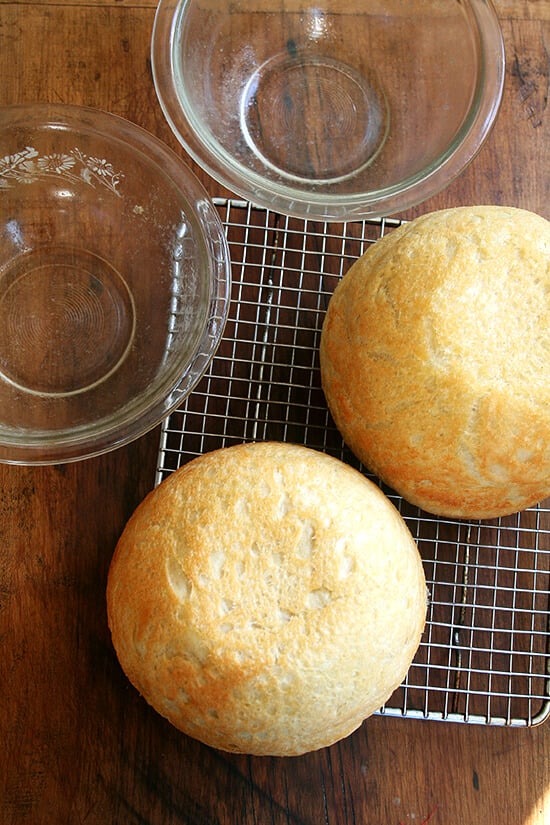
When I tell you that, if forced, I had to pick one and only one recipe to share with you that this — my mother’s peasant bread — would be it, I am serious. I would almost in fact be OK ending the blog after this very post, resting assured that you all had this knowledge at hand. This bread will change your life.
The reason I say this is simple. People go insane over homemade bread. Not once have I served this bread to company without being asked, “Did you really make this?” And questioned: “You mean with a bread machine?” But always praised: “Is there anything more special than homemade bread?”
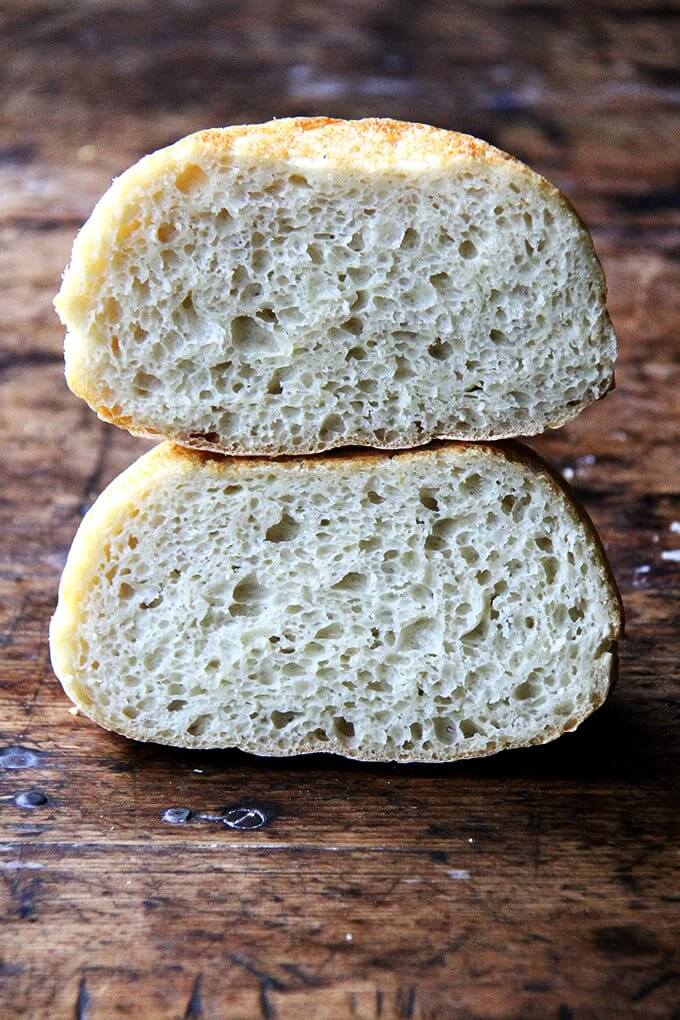
So what makes this bread so special? For one, it’s no-knead. But unlike other no-knead breads, you can start this one at 4:00 pm and turn it out onto the dinner table at 7:00 pm. It bakes in well-buttered Pyrex bowls — there is no pre-heating of the baking vessels in this recipe — and it emerges golden and crisp without any steam pans or water spritzes. This is not artisan bread, nor is it trying to be. It is peasant bread, spongy and moist with a most delectable buttery crust.
Genuinely, I would be proud to serve this bread at a dinner party attended by the bread Gods: Jim Lahey, Mark Bittman, Peter Reinhart, Chad Robertson, Jeff Hertzberg, and Zoe Francois. It is a bread I hope you will all give a go, too, and then proudly serve at your next dinner party to guests who might ask where you’ve stashed away your bread machine. And when this happens, I hope you will all just smile and say, “Don’t be silly. This is just a simple peasant bread. Easy as pie. I’ll show you how to make it some day.”
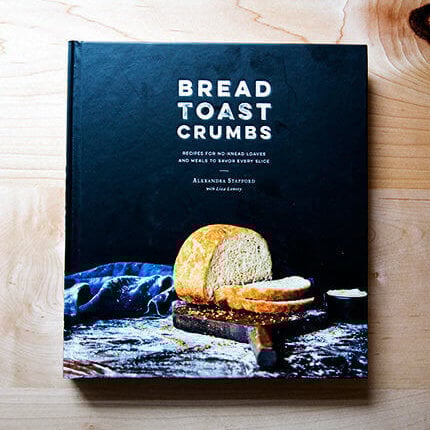
Bread Toast Crumbs
Love the peasant bread? There’s now a book filled with 40 simple bread recipes plus 70 recipes to use up every crumb of every loaf you bake.
How to Make Peasant Bread, Step by Step
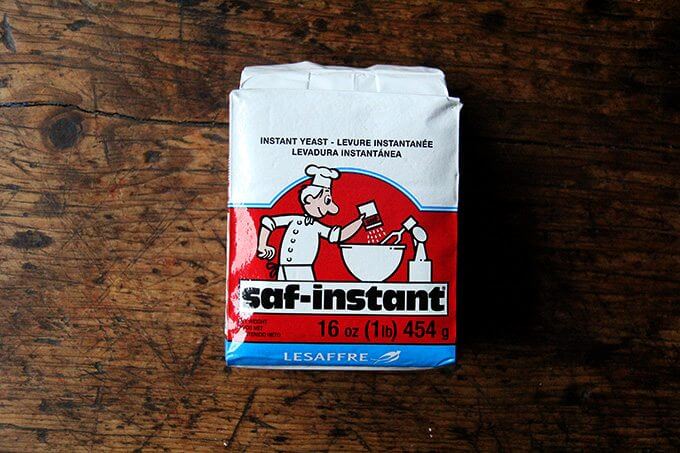
First: You need yeast. I love SAF Instant Yeast. Instant yeast can be whisked directly into the flour without blooming or proofing. If you want to stick to active-dry yeast, there are instructions in the recipe notes on how to do so. Red Star yeast is great.
Whisk together flour, salt, sugar, and instant yeast. Add lukewarm water.
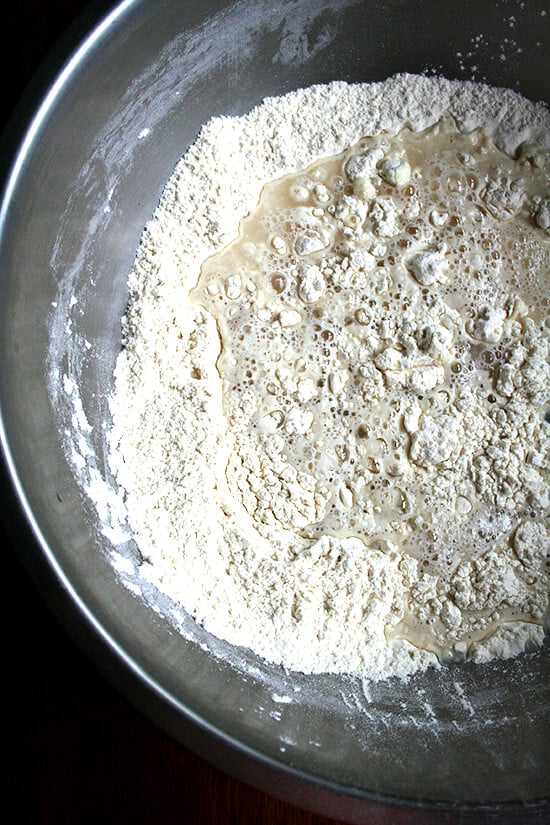
Mix until you have a sticky dough ball. Let it rise for 1.5 to 2 hours…
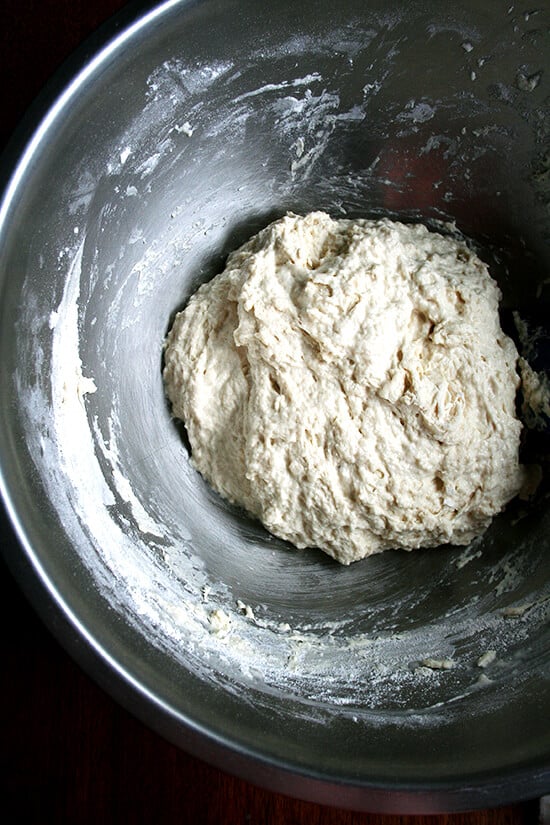
… or until it looks like this:
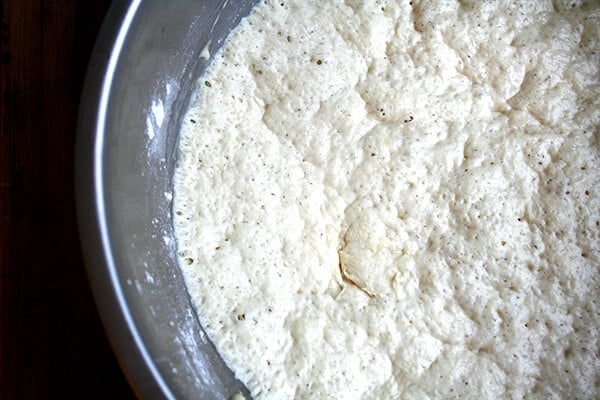
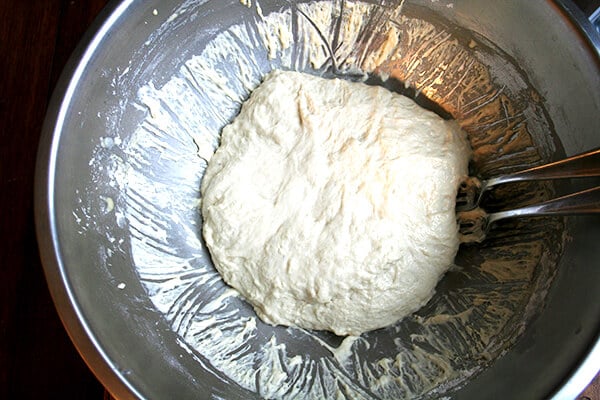
Punch down the dough using two forks.
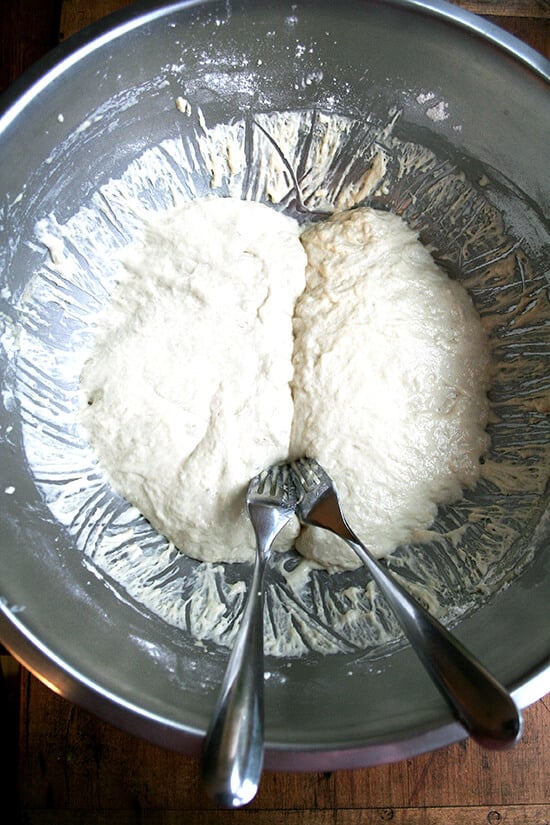
Then split the dough down the middle again using the two forks.
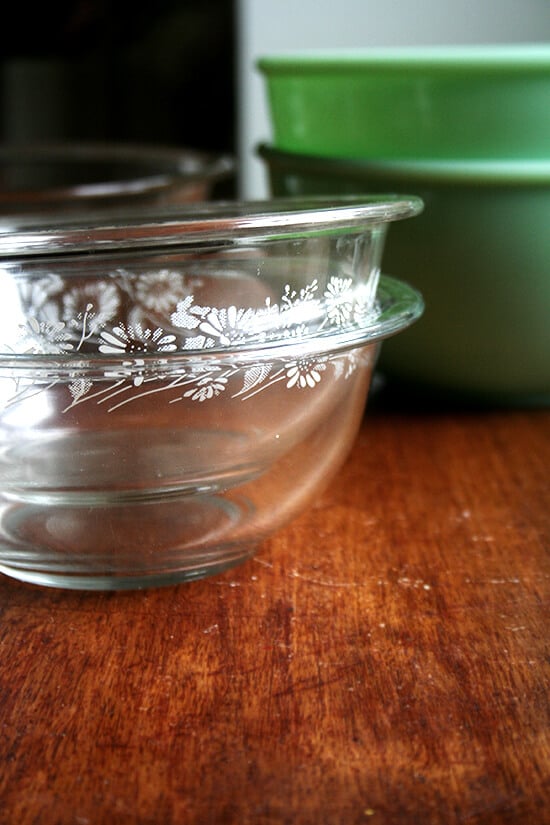
Because this is a very wet dough, it must be baked in an oven-proof bowl. I am partial to the Pyrex 1L 322 size, but any similarly sized oven-proof bowl will work.
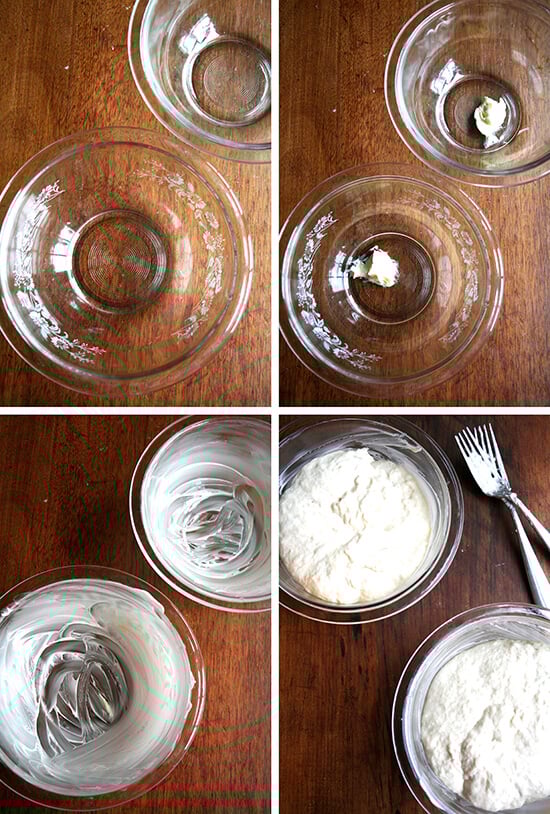
Butter the bowls well; then transfer half of the dough to each prepared bow.
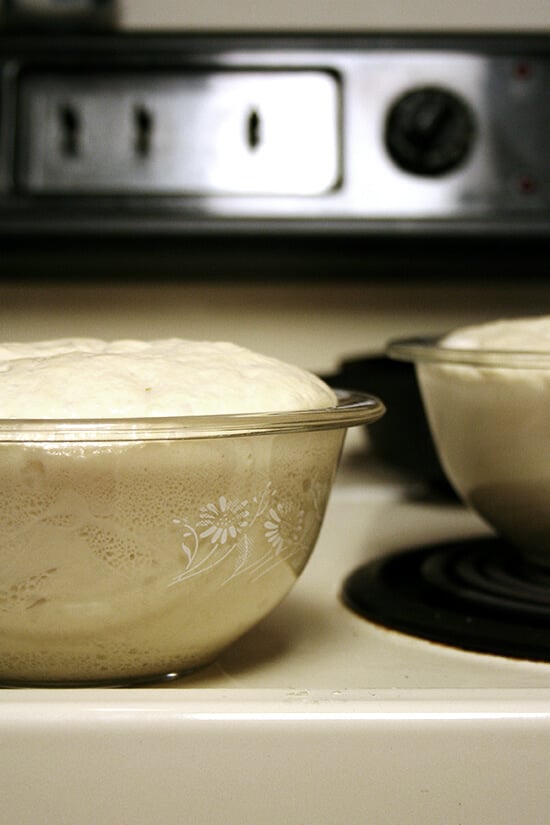
Let the dough rise again until it crowns the rim of the bowl, about 30 minutes.
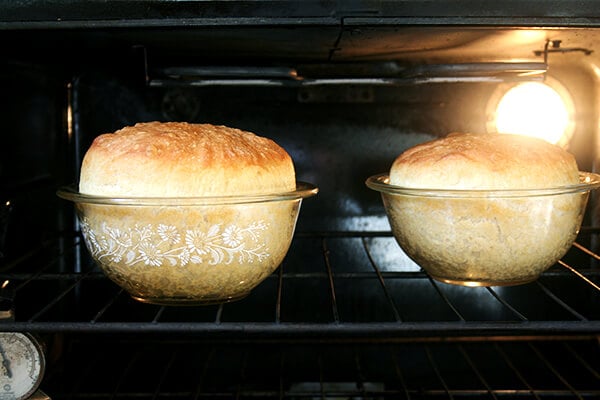
Transfer the bowls to the oven to bake:
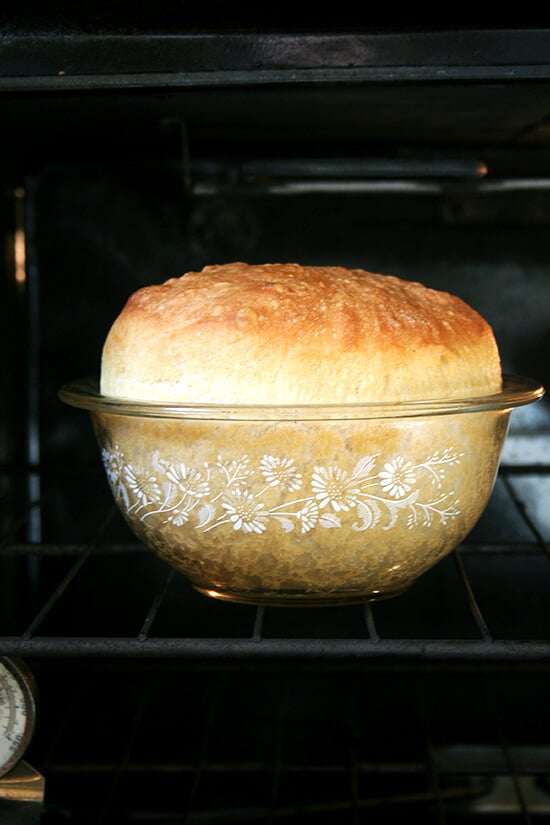
This bread is irresistible when it’s freshly baked, but it also makes wonderful toast on subsequent mornings as well as the best grilled cheese and sandwiches of all kinds.
My Mother’s Peasant Bread: The Best Easiest Bread You Will Ever Make
- Total Time: 2 hours 27 minutes
- Yield: 2 loaves 1x
Description
Notes:
This is a sticky, no-knead dough, so, some sort of baking vessel, such as pyrex bowls (you need two 1-qt bowls) or ramekins for mini loaves is required to bake this bread. See notes below the recipe for sources. You can use a bowl that is about 2 qt or 2 L in size to bake off the whole batch of dough (versus splitting the dough in half) but do not use this size for baking half of the dough — it is too big.
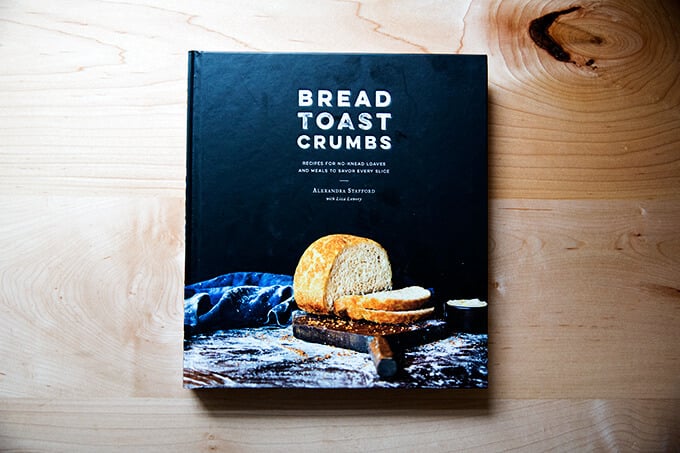
Peasant Bread Fans! There is a book: Bread Toast Crumbs, a loaf-to-crumb bread-baking book, filled with tips and tricks and answers to the many questions that have been asked over the years. In the book you will find 40 variations of the master peasant bread recipe + 70 recipes for using up the many loaves you will bake. Learn more about the book here or buy it here.
Ingredients
- 4 cups (512 g) unbleached all-purpose or bread flour
- 2 teaspoons (10 g) kosher salt
- 2 cups (454 g) lukewarm water (made by mixing 1.5 cups cold water with 0.5 cup boiling water)
- 2 teaspoons (8 g) sugar
- 2 teaspoons (8 g) instant yeast, I love SAF Instant Yeast, see notes below
- room temperature butter, about 2 tablespoons
Instructions
- Mixing the dough: In a large mixing bowl, whisk together the flour, salt, sugar, and instant yeast (I love SAF Instant Yeast). Add the water. Mix until the flour is absorbed. (If you are using active dry yeast, see notes below.)
- Let it rise. Cover bowl with a tea towel or plastic wrap and set aside in a warm spot to rise for at least an hour. (In the winter or if you are letting the bread rise in a cool place, it might take as long as two hours to rise.) This is how to create a slightly warm spot for your bread to rise in: Turn the oven on at any temperature (350ºF or so) for one minute, then turn it off. Note: Do not allow the oven to get up to 300ºF, for example, and then heat at that setting for 1 minute — this will be too hot. Just let the oven preheat for a total of 1 minute — it likely won’t get above 100ºF. The goal is to just create a slightly warm environment for the bread.
- Preheat the oven to 425ºF. Grease two 1-qt or 1.5-qt oven-safe bowls (see notes below) with about a tablespoon of butter each. Using two forks, punch down your dough, scraping it from the sides of the bowl, which it will be clinging to. As you scrape it down try to pull the dough toward the center (see video below for guidance). You want to loosen the dough entirely from the sides of the bowl, and you want to make sure you’ve punched it down. Then, take your two forks and divide the dough into two equal portions — eye the center of the mass of dough, and starting from the center and working out, pull the dough apart with the two forks. Then scoop up each half and place into your prepared bowls. This part can be a little messy — the dough is very wet and will slip all over the place. Using small forks or forks with short tines makes this easier — my small salad forks work best; my dinner forks make it harder. It’s best to scoop it up fast and plop it in the bowl in one fell swoop. Some people like to use flexible, plastic dough scrapers for this step.
- Let the dough rise again for about 20 to 30 minutes on the countertop near the oven (or near a warm spot) or until it has risen to just below or above (depending on what size bowl you are using) the top of the bowls. (Note: Do not do the warm-oven trick for the second rise, and do not cover your bowls for the second rise. Simply set your bowls on top of your oven, so that they are in a warm spot. Twenty minutes in this spot usually is enough for my loaves.)
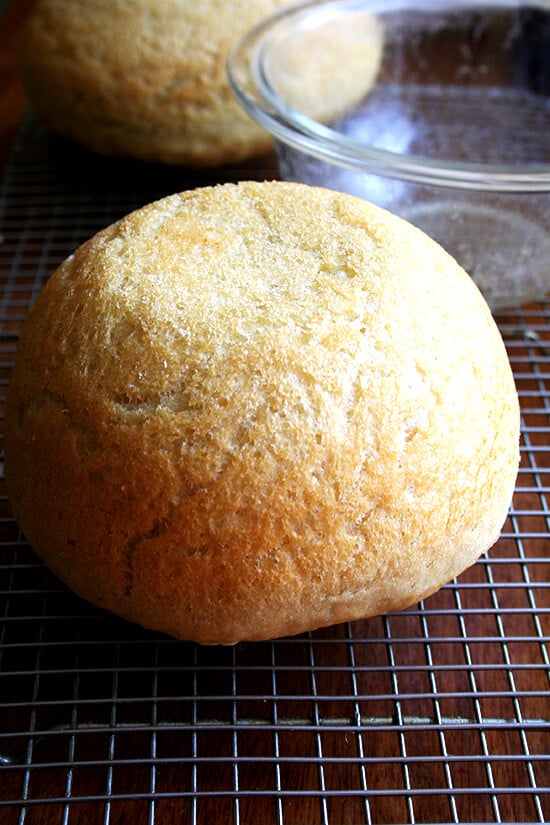
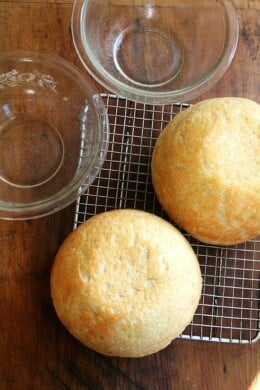
- Bake it. Bake for 15 minutes. Reduce the heat to 375º and bake for 15 to 17 minutes longer. Remove from the oven and turn the loaves onto cooling racks. If you’ve greased the bowls well, the loaves should fall right out onto the cooling racks. If the loaves look a little pale and soft when you’ve turned them out onto your cooling racks, place the loaves into the oven (outside of their bowls) and let them bake for about 5 minutes longer. Remove from oven and let cool for 10 minutes before cutting.
Notes
- The bowls: The cheapest, most widely available 1-qt bowl is the Pyrex 322. Update: These bowls are becoming harder to find and more expensive. Here’s another option: the Pyrex 3-piece set. You can split the dough in half as always (see recipe) and bake half in the 1-quart bowl and half in the 1.5 quart bowl. The loaves will not be the same shape, but they will be delicious nonetheless. This Anchor Hocking set is another great option.
- Yeast: I buy SAF Instant Yeast in bulk from Amazon I store it in my fridge or freezer, and it lasts forever. If you are using the packets of yeast (the kind that come in the 3-fold packets), just go ahead and use a whole packet — It’s 2.25 teaspoons. I have made the bread with active dry, rapid rise, and instant yeast, and all varieties work. The beauty of instant yeast is that there is no need to “proof” it — you can add the yeast directly to the flour. I never use active-dry yeast anymore.
- If you have active-dry yeast on hand and want to use it, here’s how: In a small mixing bowl, dissolve the sugar into the water. Sprinkle the yeast over top. There is no need to stir it up. Let it stand for about 10 to 15 minutes or until the mixture is foamy and/or bubbling just a bit — this step will ensure that the yeast is active. Meanwhile, in a large bowl, whisk together the flour and salt. When the yeast-water-sugar mixture is foamy, stir it up, and add it to the flour bowl. Mix until the flour is absorbed.
- Troubleshooting: You can find step-by-step video instruction here.
- Several commenters have had trouble with the second rise, and this seems to be caused by the shape of the bowl they are letting the dough rise in the second time around. Two hours for the second rise is too long. If you don’t have a 1-qt bowl, bake 3/4 of the dough in a loaf pan and bake the rest off in muffin tins or a popover pan. The second rise should take no more than 30 minutes.
- Also, you can use as many as 3 cups of whole wheat flour, but the texture changes considerably. I suggest trying with all all-purpose or bread flour to start and once you get the hang of it, start trying various combinations of whole wheat flour and/or other flours.
- The single most important step you can take to make this bread truly foolproof is to invest in a digital scale. This one costs under $10. If you are not measuring by weight, do this: scoop flour into the measuring cup using a separate spoon or measuring cup; level off with a knife. The flour should be below the rim of the measuring cup.
- Here’s a printable version of this recipes that’s less wordy: Peasant Bread Recipe, Simplified
- How to Bake the Peasant Bread in a Dutch Oven: Preheat a Dutch Oven for 45 minutes at 450ºF. Dust a clean work surface with flour. After the first rise, turn the dough out onto the floured surface and shape it into a ball: I like to fold it envelope style from top to bottom, then side to side; then I flip it over and use the pinkie edges of my hands to pinch the dough underneath and create some tension. Transfer the dough to a sheet of parchment paper. Let rest for 20 minutes. If you feel your dough is spreading too much you can lift up the sheet of parchment paper, dough and all, and place it in a bowl of a similar size. After the 20 minutes, transfer the dough, parchment paper and all to the Dutch oven. Carefully cover it. Bake 30 minutes. Uncover. Bake 15 minutes more.
- To bake the peasant bread in a loaf pan: If you are using an 8.5×4.5-inch loaf pan or a 9×5-inch loaf pan, you can bake 3/4 of the dough in it; bake off the rest of the dough in ramekins or other small vessels … the mini loaves are so cute. You can also make 1.5x the recipe, and bake the bread in 2 loaf pans. If you have a large loaf pan, such as a 10×6-inch loaf pan, you can bake off the entire batch of dough in it. For loaf pans, bake at 375ºF for 45 minutes.
- How to Bake at Hight Altitude:
- First try the original recipe as written (preferably with a scale). You may not need to make any adjustments. One commenter, who lives at 9200 ft finds the original recipe to work just fine as is.
- If the original recipe doesn’t work, try adding a little bit more water because it rises fast and it is so dry: about a quarter cup for every 512 g of flour.
- Try decreasing the yeast to 1.5 teaspoons.
- If your dough is especially gooey, try decreasing the water by 1/4 cup. But, if you aren’t using a scale, my first suggestion would be to buy a scale and weigh the flour, and make the bread once as directed with the 2 cups water and 512 grams flour, etc.
- Punch the dough down twice before transferring it to the buttered Pyrex bowls. In other words, let it rise for 1-1.5 hours, punch it down, let it rise again for about an hour, punch it down, then transfer it to the buttered bowls.
- Variations:
- #1. Cornmeal. Substitute 1 cup of the flour with 1 cup of cornmeal. Proceed with the recipe as directed.
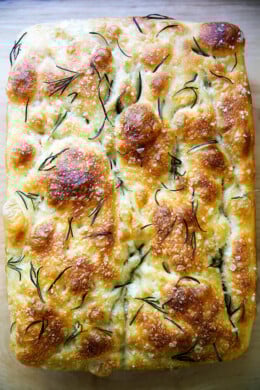
- #2. Faux focaccia. Instead of spreading butter in two Pyrex bowls in preparation for baking, butter one 9×9-inch glass baking dish and one Pyrex bowl or just butter one large 9×13-inch Pyrex baking dish. If using two vessels, divide the dough in half and place each half in prepared baking pan. If using only one large baking dish, place all of the dough in the dish. Drizzle dough with 1 tablespoon of olive oil (if using the small square pan) and 2 tablespoons of olive oil (if using the large one). Using your fingers, gently spread the dough out so that it fits the shape of the pan. Use your fingers to create dimples in the surface of the dough. Sprinkle surface with chopped rosemary and sea salt. Let rise for 20 to 30 minutes. Bake for 15 minutes at 425ºF and 17 minutes (or longer) at 375ºF. Remove from pan and let cool on cooling rack.
- #3. Thyme Dinner Rolls
- #4 Gluten-free
- #5. Everything Bagel Seasoning Bread. Simply coat the buttered bowls with everything bagel seasoning. Other seeds and seed mixes work, too, like sesame seeds and dukkah.
- #6: Whole Wheat Peasant Bread. Use as much as 50% whole wheat flour.
- Prep Time: 5 minutes
- Cook Time: 32 minutes
- Category: Bread
- Method: Baked
- Cuisine: American
This post may contain affiliate links. Please read my disclosure policy.





7,129 Comments on “My Mother’s Peasant Bread: The Best Easiest Bread You Will Ever Make”
This bread is fabulous! Thank you!
So happy to hear this, Gabrielle!
I just wanted to thank you so much for posting this bread recipe. I have made it a lot, given it away and tweaked it. My favorite tweak is to add nuts and seeds. I only make half a recipe at a time so it stays fresh. For the nuts and seeds I add, 1/4 cup of pumpkin and sunflower seeds, along with 1 t of sesame, caraway, and poppy seeds. I use a Pyrex, 8.5×4.5×2.5 loaf pan and only have to spray it with non stick spray, and the bread immediately pops out. The nuts and seeds seem to make it a little more firm, thus easier to slice. I have also used yourbasic recipe to make rolls, popping some in muffin tins. They come out unbelievable I use your instructions for proofing the yeast and for the first rise time. I have never had a failed loaf. Thank you again for sharing. I always feel it is an honor to pass along a recipe, recipes should always be shared. Besides no two cooks cook exactly the same anyway!
Hi Debbi!
Thanks so much for your nice comment. I am so happy to read all of this and so happy to hear you have had success with so many variations. I often use loaf pans as well, because we go through a lot of bread here, but I do a 1.5 x the recipe and use 2 loaf pans. AND, just recently I have also started buying nonstick spray because it is so much easier than greasing. Anyway, thanks so much for writing in!
This was the best recipe I have tried so far! I’ve tried about 3 or 4 recipes and definitely like this one the best! Easy recipe and I will make it again and again! Thank you!
Thank you so much for this wonderful recipe. I never made bread before finding this recipe, and I have made this bread about 20 times this year! Every single time, it came out perfect. Thank you for the great, comprehensive recipe!
Hi Alexandra,Thank you for this great recipe! Everyone I’ve given it to, loves it. I have recently started a sourdough starter and I’d like to use it with this recipe. Have you tried it? Do you know if it works or do you have any suggestions on how to change the measurements in order to use the starter? If so, I’d love to find out. Thank you!
Hi Alexandra, I tried this recipe and it turned out very well. I did not have quite enough AP flour so I used a bit of bread flour. Other no-knead recipes call for Bread Flour. What are your thoughts?
Hi June,
You absolutely can use bread flour here. Most people have ap flour on hand, and I’ve found little difference in using ap or all-purpose, which is why I call for ap flour. But, by all means, use bread flour if you have it!
This is sooooo good! So easy! This will be my Go To recipe from now on. I also love how little time it takes. I have had to use two different yeast brands but definitely like the brand you use the best. (I was really surprised at the difference.) Can’t wait to Show off my skills at Easter! lol Thank you for the recipe
You are going to be the MVP of Easter … love it 🙂 Thanks for writing in.
So happy to hear this, Lynn! And Happy Easter!!
Made a white version and just finished rye… delish but the are a bit moist inside…. should I add time to the last bit of baking? or is that the way the recipe is. This is my first stab at bread and I’m so happy to be making this rye for my husbands corned beef sandwhich for lunch tomorrow…! Thanks…
So happy to hear this, Karen! Homemade rye is such a treat. Every oven is different, so if your loaves are a little moist, add five or even ten minutes to the baking time. This bread is very forgiving.
Thanks…
Now to try sour dough… been watching Micheal Pollens Cooked… very inspiring…
This recipe looks amazing! I have a 2.5 L bowl, can I bake the entire batch in this and if so how should I adjust the baking time? I’m really new to making bread so your help is very much appreciated! Thanks!
Hi Katie! Sorry for the delay here. Yes, bake the whole thing in that bowl. I bake the whole batch in a 2-qt bowl, and the finished loaf rises just barely above the rim. You may find that your loaf does not quite crown the rim of the bowl — just a head’s up. I would bake it for 15 minutes at 425 and 25 minutes at 375. That should do it!
I am making it for the first time and am wicked excited! But I had a lackluster second rise, have you had any experience with that? Using this bowl for baking, too big maybe?
Hi Darcie! I think the bowl is too big. Are you baking the whole loaf in that bowl or half the loaf in that bowl? I bake the full loaf in a 2 qt bowl, so I think you could probably fit the whole loaf in that bowl.
Thank you so much for your wonderful recipes, I made the Thyme Dinner Rolls and had them with a hearty homemade soup for dinner, my family were impressed and have a batch of your overnight hot cross buns in the fridge all ready to surprise my family tomorrow (Good Friday) with fresh – hot cross buns. Thank you again
Recommend using a cooking spray or butter on the cellophane when doing the first rise to avoid it sticking to the dough. I also put butter on the top crust when it comes out of the oven after baking. What a great recipe!
Yay! So happy to hear this!
Hi, this bread sounds great and I’m going to try it. Can you tell me how it would turn out if you substituted milk for part of the water.
Hi! I really want to make this bread! It sounds so good. I was just wondering though, does using a 2 Liter Pyrex bowl rather than the 1-1.5 L change the baking time at all?
You will most likely need to bake it for 10 to 15 minutes longer — you’re baking the whole batch in the 2L right? I would do 15 min at 425ºF and 30 minutes at 375ºF.
I love this recipe.
When using the warm oven method for the first rise, is covering the bowl necessary?
YEs! It prevents a thin, dry crust from forming on the top of the bread. So glad you like the recipe!
has anyone tried this with almond flour or any other flour thats healthy…not white or wheat??
to bad this website causes loading to be so slow and makes it impossible to engage in
Thank you so much for posting this recipe! I’ve had good success with it and my family and friends have enjoyed the results. This has given me the confidence to learn more baking and cooking.
So happy to hear this, JV! Thanks for writing in 🙂
Making this tonight, after having had to take a break for a few months. (I used this recipe to bake bread for a stage show my roommate was working for at her college). I think I probably made at least 20 loaves, most of which used the entire batch without dividing it (looked better from the audience.) It was a hit. The actors adored it, and a few times I was called to make new emergency bread, because they had eaten it offstage as well as onstage, and had run out. Love it! And glad I’m not sick of bread baking forever.
Wow, amazing story! Thanks so much for writing in. Loved reading this, and I’m so happy you’re not sick of bread baking 🙂
This bread is the BEST!! We always eat it fresh right out of the oven. BUT, it makes the best garlic toast!! We eat it with spaghetti or stuffed zucchini – anything Italian or just by itself. I think it’s the best garlic toast I have ever eaten!! Thanks again for this wonderful recipe.
I just made this bread for the first time and before today, I had no idea I could bake in my pyrex bowls lol. I used 1 1/2 cups whole wheat flour and 2 cups all purpose and it was perfect. I might add more flour for a white loaf but this amount was great for whole wheat.
I’m in love with this recipe! After many bread making failures under my belt, this one has renewed my faith in, and resolve to, baking my own bread!
I’m hopeful this recipe will work as a base to many variations, as I love experimenting with different flavors. Do you have any experience/tips with adding interesting things such as dried fruits, nuts, garlic or cheese? I’m so excited! Thank you so much for sharing this gem!
Hello Alexandra.
I woke up this morning thinking I needed to make a few loaves of homemade bread to share with neighbors and after re-reading your delightful commentary, this is the recipe I’m going to try out. I don’t even recall how I chanced upon your site but I had bookmarked your peasant bread recipe many months ago. Thank you for sharing! I know the bread is going to turn out delicious and will be appreciated by all!
This is such a good recipe. Super simple but one of the best tasting breads I have ever made. I made pizza bread with olives and it was SOOO bomb!
Yum! Love this idea!
I tried this and baked in a wood oven. It worked great. Thank you!
wow, awesome!
I found your recipe and how to, it turned out great, today I am using 1 c. of oat flour (made my own) for one of the white, so excited to see how it turns out. So very easy to make this and fast.
We’re in a mountain cabin for the week and I really wanted to bake some bread. No cup measure, but there is one Pyrex bowl and a Pyrex pie plate so I used a coffee cup and split the dough between the bowl and pie plate. The cabin had that wonderful smell that only baking bread can make and it turned out really well! I love the crispy crust. I was great fresh and made good chewy, crunchy toast as well. We’ll try it for sandwiches at lunch. Thanks!
So happy to hear this, Amy!! Isn’t it satisfying when things turn out well in sub-optimal conditions (at least in terms of gadgetry)?
Thanks for writing in! So glad this worked out in the mountains 🙂
Hi,
I’ve been purchasing Peasant Bread at Whole Foods and just couldn’t stomach the price…with college kids home for the summer we were going through several loaves a week at 4.50 a loaf!! The baker at Whole Foods told me it was easy to bake and between his advice and your website I decided to try it. The yeast is active; just opened a new pouch purchased at Whole Foods and it did just what you described when I added it to lukewarm water with the sugar. The first rise was terrific; though I noticed when I punched it down it was gooier than yours on your video. I used 485 grams of King Arthur Bread Flour. Measured the rest pretty carefully. The second rise (in 1.5 quart Pyrex bowls) took about 45 minutes. And its not rising up well during the baking. We live in a very hot, humid climate in Charleston, SC and I wondered if that affects the rising? I simply don’t know. Your blog and tutorial are excellent, by the way. Thank you for posting it and giving those of us with no previous experience a shot at trying something wonderful. Any advice you have would be welcome; I’d really love to bake our own Peasant Bread! Thank you!
Hi Catherine,
Thanks so much for writing in! And thank you for your kind words. OK, I have a few thoughts for you if you feel like giving it another go. With 1.5 qt bowls, I would do 1.5 times the recipe. You can keep the yeast about the same (1 packet or 2.25 tsp yeast) or use 2.5 tsp. Also, given your humid climate, I would use the 510/512 g flour for the original recipe and 768 g of flour for 1.5 times the recipe. Here are the proportions: 768 g flour, 3 tsp salt, 3 tsp sugar, 2.5 tsp yeast, 3 cups lukewarm water. These proportions also bake up really well in loaf pans — I also like to add 1/3 cup of olive oil (or grapeseed or canola oil) to this version. Hope that helps! Let me know if you have any other questions!
Thank you so much!! I didn’t see this before I decided to give it a second shot. Since the issue seemed to be with the second rise; I’m trying (as I write) that second rise on top of the fridge. A friend thought that leaving them on my stove top while preheating may have been too warm for the bottom of the bowls and perhaps killed some of the yeast. However, they’re not rising on top of the refrigerator, either : (. I did indeed increase the amount of flour to 510 gr But I think now I will try the 1.5 times increase. Funny thing is, last time I made this we had a thunderstorm; today I thought the weather was clear but I just heard thunder. So maybe something with the atmosphere is to blame as well. Thanks for your advice; I’ll let you know how the next batch comes out. Got to head back to the store for some more yeast!
Sure thing! I think (hope!) you will have success with the bigger proportions. Your friend might be on to something — sometimes stovetops do get hot, but if you can touch the surface with your hand without burning, it should be fine. One other thought: you are just preheating the oven for a total of 1 minute, right? When I first posted this recipe, people were preheating their oven to 400 degrees, then letting it heat for 1 minute, which was way too hot—the yeast was in fact being killed. Anyway, good luck! Let me know how it goes!
I’m in Charleston, SC too and having the same problem! I will follow the advice you gave to Catherine and see if it works for me. I used to make your recipe all the time when I lived in Indiana and it was perfect every time. So strange!
Very interesting Rebekah — so sorry to hear this. It’s interesting how the humidity affects things. Please keep me posted and let me know if you have any questions!
how do you store your bread after to keep the crisp?
also want to mention i just finished a batch and all i can say is YUMMMMMM! thank you for your recipe 🙂
Yay! Makes me so happy!
Carole, it’s really hard to keep the crisp after a day. Recently, I’ve been really liking my bread box. I have two from King Arthur Flour. I find it allows the bread to breath—it keeps the crumb soft and the crust as crisp as possible in the days after it is baked, so it’s not like a ziplock, which will keep the bread soft, but which will promote mold growth. But, if you want to crisp it up, just heat it in the oven at 350 for 10 to 15 minutes, or toast slices of it in the toaster. It revives well!
Can you give me an ingredient list for a rye and maybe a pumpernickel version? Your bread makes the most delicious toasted cheese sandwiches-I just LOVE it! Thank you!
Hi Sandy,
I’m going to email you tonight. Email me back: ali.c.stafford@gmail.com if you don’t hear from me. I have a rye recipe for you!