 →
→ 

My Mother’s Peasant Bread: The Best Easiest Bread You Will Ever Make
 By Alexandra Stafford
—
Last Updated: 02/11/2026
By Alexandra Stafford
—
Last Updated: 02/11/2026
This post may contain affiliate links. Please read my disclosure policy.
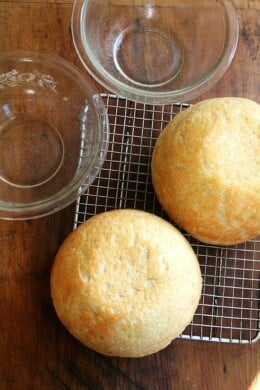
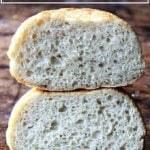
This is the no-knead bread recipe my mother has been baking for 45 years. Start to finish, it can be ready in three hours. It bakes in well-buttered Pyrex bowls — no need to preheat a baking vessel for this recipe — and it emerges golden and crisp with a soft, tender crumb. 🍞🍞🍞🍞🍞
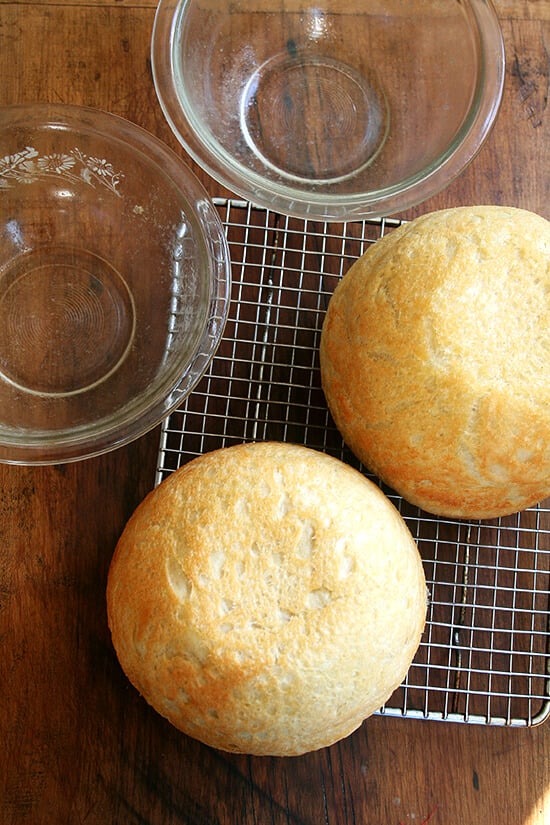
When I tell you that, if forced, I had to pick one and only one recipe to share with you that this — my mother’s peasant bread — would be it, I am serious. I would almost in fact be OK ending the blog after this very post, resting assured that you all had this knowledge at hand. This bread will change your life.
The reason I say this is simple. People go insane over homemade bread. Not once have I served this bread to company without being asked, “Did you really make this?” And questioned: “You mean with a bread machine?” But always praised: “Is there anything more special than homemade bread?”
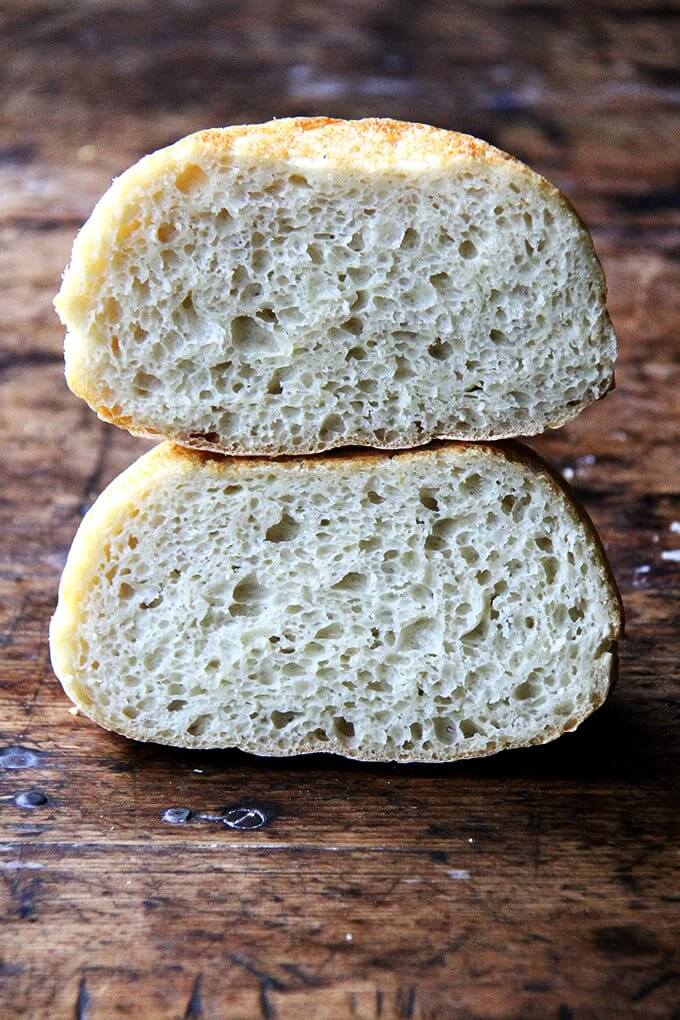
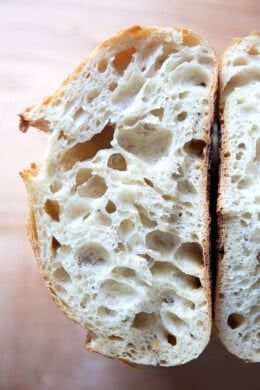
So what makes this bread so special? For one, it’s no-knead. But unlike other no-knead breads, you can start this one at 4:00 pm and turn it out onto the dinner table at 7:00 pm. It bakes in well-buttered Pyrex bowls — there is no pre-heating of the baking vessels in this recipe — and it emerges golden and crisp without any steam pans or water spritzes. This is not artisan bread, nor is it trying to be. It is peasant bread, spongy and moist with a most delectable buttery crust.
Genuinely, I would be proud to serve this bread at a dinner party attended by the bread Gods: Jim Lahey, Mark Bittman, Peter Reinhart, Chad Robertson, Jeff Hertzberg, and Zoe Francois. It is a bread I hope you will all give a go, too, and then proudly serve at your next dinner party to guests who might ask where you’ve stashed away your bread machine. And when this happens, I hope you will all just smile and say, “Don’t be silly. This is just a simple peasant bread. Easy as pie. I’ll show you how to make it some day.”
Bread Toast Crumbs
Love the peasant bread? There’s now a book filled with 40 simple bread recipes plus 70 recipes to use up every crumb of every loaf you bake.
How to Make Peasant Bread, Step by Step
First: You need yeast. I love SAF Instant Yeast. Instant yeast can be whisked directly into the flour without blooming or proofing. If you want to stick to active-dry yeast, there are instructions in the recipe notes on how to do so. Red Star yeast is great.
Whisk together flour, salt, sugar, and instant yeast. Add lukewarm water.
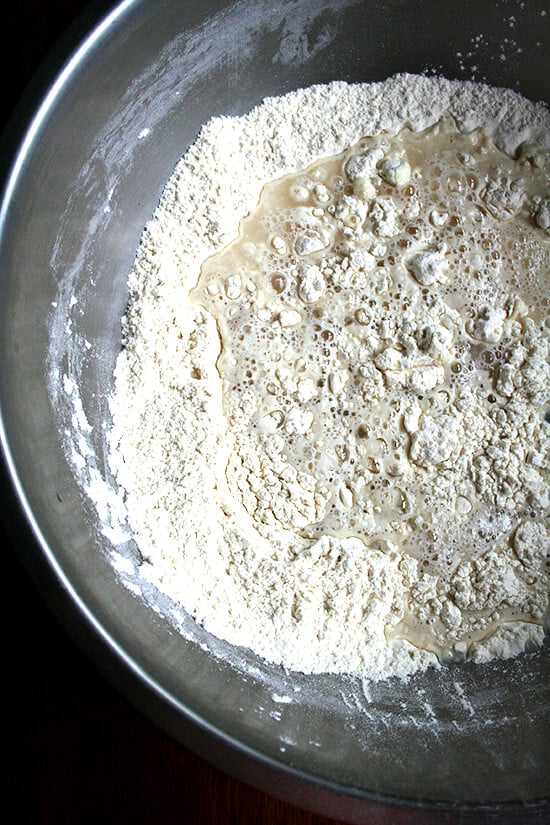
Mix until you have a sticky dough ball. Let it rise for 1.5 to 2 hours…
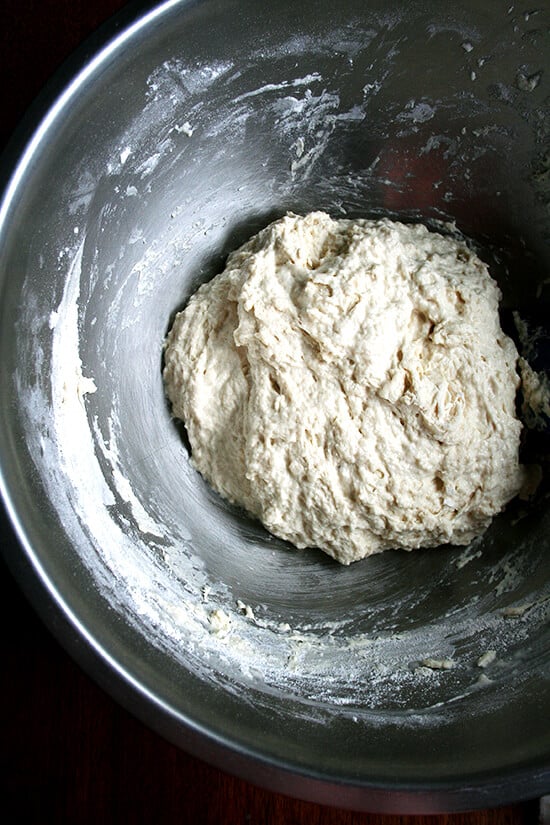
… or until it looks like this:
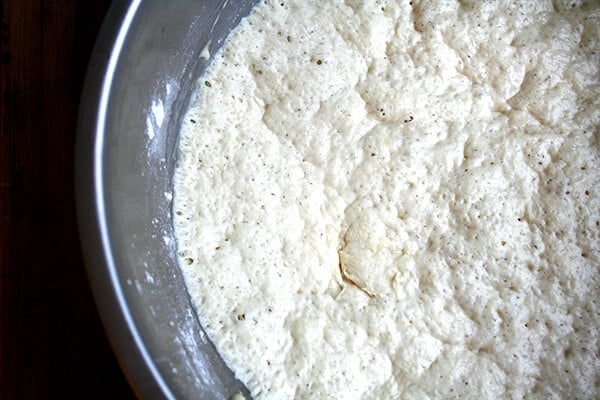
Punch down the dough using two forks.
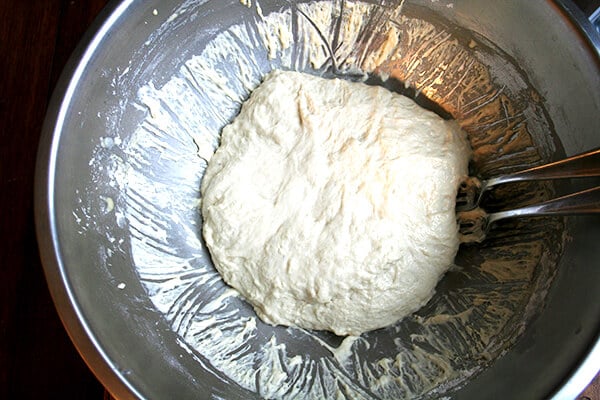
Then split the dough down the middle again using the two forks.
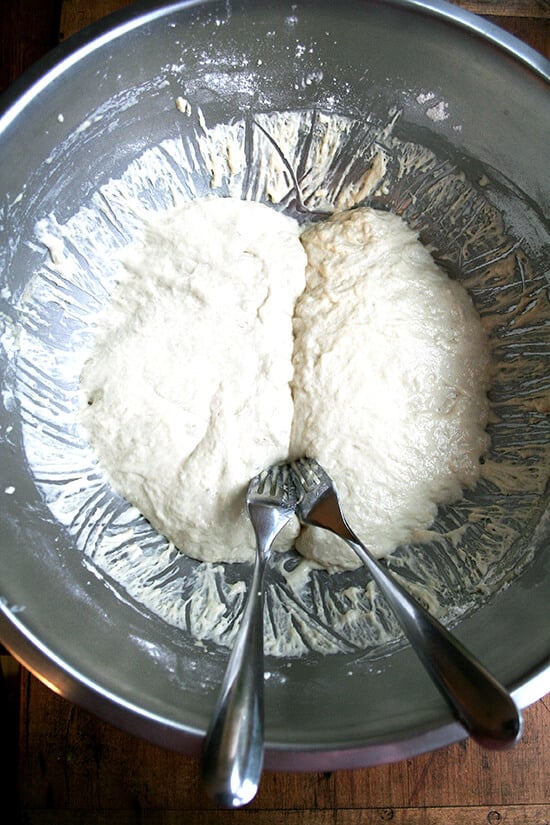
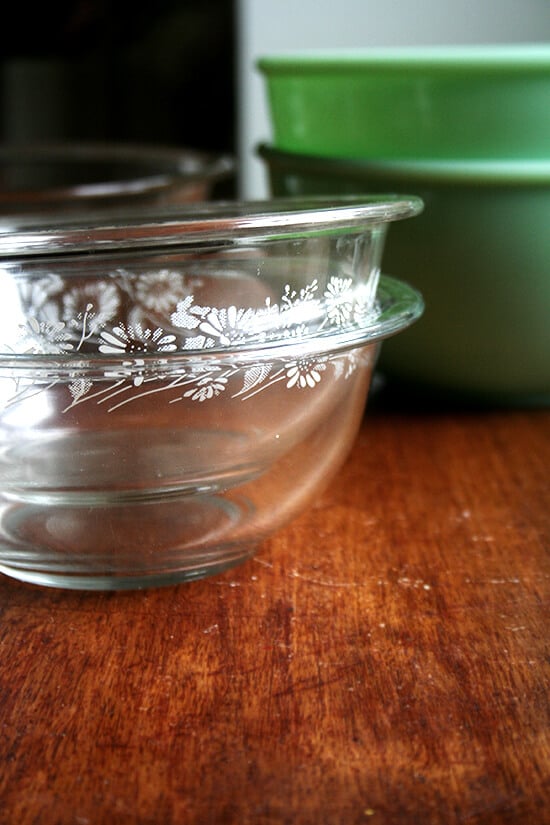
Because this is a very wet dough, it must be baked in an oven-proof bowl. I am partial to the Pyrex 1L 322 size, but any similarly sized oven-proof bowl will work.
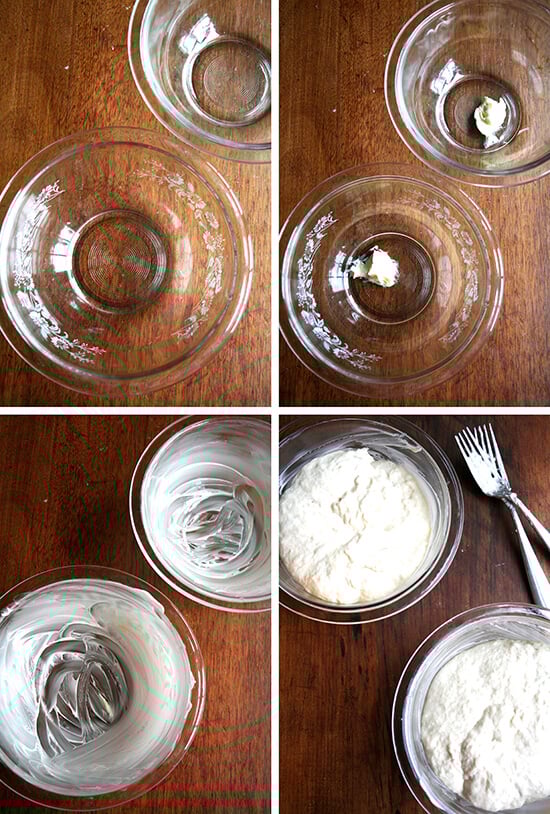
Butter the bowls well; then transfer half of the dough to each prepared bow.
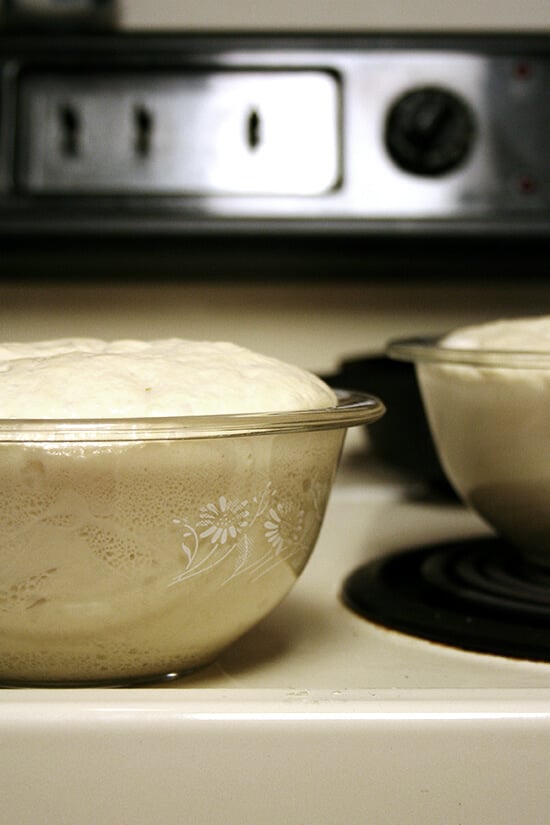
Let the dough rise again until it crowns the rim of the bowl, about 30 minutes.
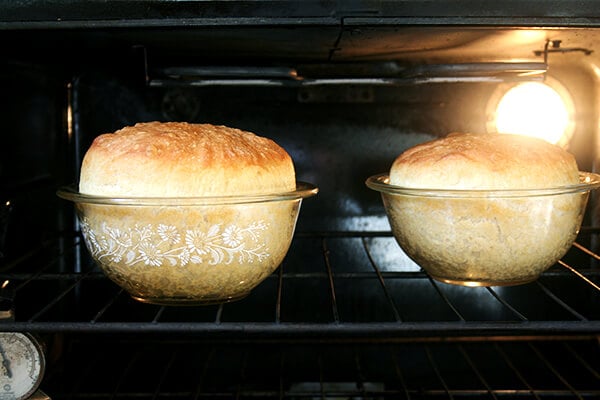
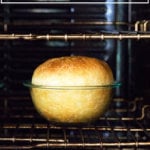
Transfer the bowls to the oven to bake:
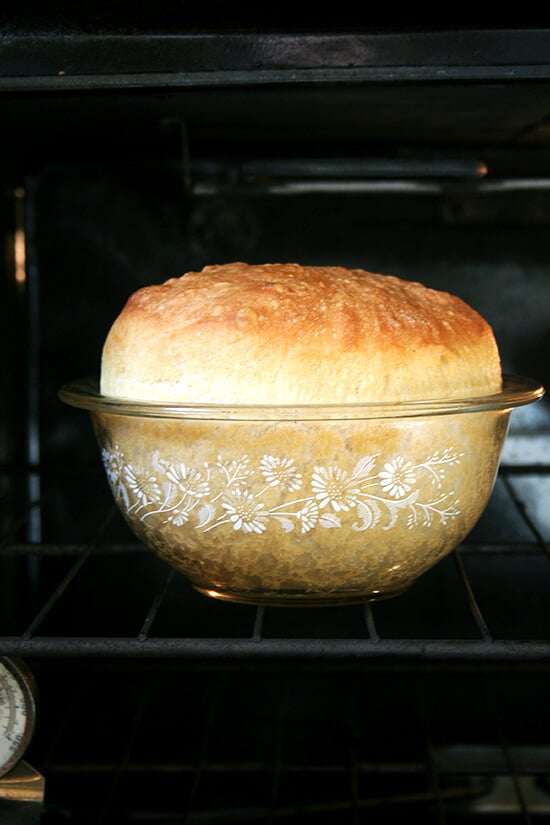
This bread is irresistible when it’s freshly baked, but it also makes wonderful toast on subsequent mornings as well as the best grilled cheese and sandwiches of all kinds.
My Mother’s Peasant Bread: The Best Easiest Bread You Will Ever Make
- Total Time: 2 hours 27 minutes
- Yield: 2 loaves 1x
Description
Notes:
This is a sticky, no-knead dough, so, some sort of baking vessel, such as pyrex bowls (you need two 1-qt bowls) or ramekins for mini loaves is required to bake this bread. See notes below the recipe for sources. You can use a bowl that is about 2 qt or 2 L in size to bake off the whole batch of dough (versus splitting the dough in half) but do not use this size for baking half of the dough — it is too big.
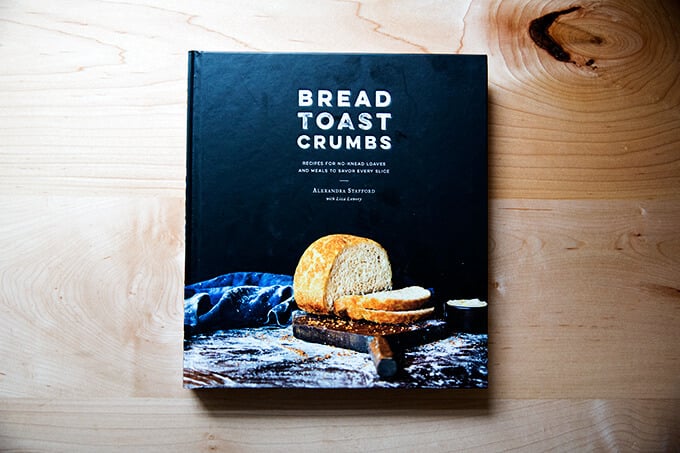
Peasant Bread Fans! There is a book: Bread Toast Crumbs, a loaf-to-crumb bread-baking book, filled with tips and tricks and answers to the many questions that have been asked over the years. In the book you will find 40 variations of the master peasant bread recipe + 70 recipes for using up the many loaves you will bake. Learn more about the book here or buy it here.
Ingredients
- 4 cups (512 g) unbleached all-purpose or bread flour
- 2 teaspoons (10 g) kosher salt
- 2 cups (454 g) lukewarm water (made by mixing 1.5 cups cold water with 0.5 cup boiling water)
- 2 teaspoons (8 g) sugar
- 2 teaspoons (8 g) instant yeast, I love SAF Instant Yeast, see notes below
- room temperature butter, about 2 tablespoons
Instructions
- Mixing the dough: In a large mixing bowl, whisk together the flour, salt, sugar, and instant yeast (I love SAF Instant Yeast). Add the water. Mix until the flour is absorbed. (If you are using active dry yeast, see notes below.)
- Let it rise. Cover bowl with a tea towel or plastic wrap and set aside in a warm spot to rise for at least an hour. (In the winter or if you are letting the bread rise in a cool place, it might take as long as two hours to rise.) This is how to create a slightly warm spot for your bread to rise in: Turn the oven on at any temperature (350ºF or so) for one minute, then turn it off. Note: Do not allow the oven to get up to 300ºF, for example, and then heat at that setting for 1 minute — this will be too hot. Just let the oven preheat for a total of 1 minute — it likely won’t get above 100ºF. The goal is to just create a slightly warm environment for the bread.
- Preheat the oven to 425ºF. Grease two 1-qt or 1.5-qt oven-safe bowls (see notes below) with about a tablespoon of butter each. Using two forks, punch down your dough, scraping it from the sides of the bowl, which it will be clinging to. As you scrape it down try to pull the dough toward the center (see video below for guidance). You want to loosen the dough entirely from the sides of the bowl, and you want to make sure you’ve punched it down. Then, take your two forks and divide the dough into two equal portions — eye the center of the mass of dough, and starting from the center and working out, pull the dough apart with the two forks. Then scoop up each half and place into your prepared bowls. This part can be a little messy — the dough is very wet and will slip all over the place. Using small forks or forks with short tines makes this easier — my small salad forks work best; my dinner forks make it harder. It’s best to scoop it up fast and plop it in the bowl in one fell swoop. Some people like to use flexible, plastic dough scrapers for this step.
- Let the dough rise again for about 20 to 30 minutes on the countertop near the oven (or near a warm spot) or until it has risen to just below or above (depending on what size bowl you are using) the top of the bowls. (Note: Do not do the warm-oven trick for the second rise, and do not cover your bowls for the second rise. Simply set your bowls on top of your oven, so that they are in a warm spot. Twenty minutes in this spot usually is enough for my loaves.)
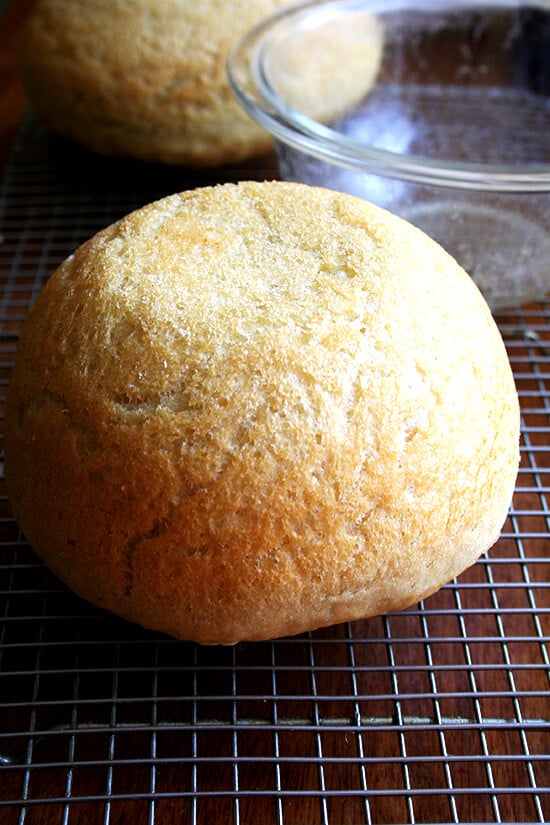
- Bake it. Bake for 15 minutes. Reduce the heat to 375º and bake for 15 to 17 minutes longer. Remove from the oven and turn the loaves onto cooling racks. If you’ve greased the bowls well, the loaves should fall right out onto the cooling racks. If the loaves look a little pale and soft when you’ve turned them out onto your cooling racks, place the loaves into the oven (outside of their bowls) and let them bake for about 5 minutes longer. Remove from oven and let cool for 10 minutes before cutting.
Notes
- The bowls: The cheapest, most widely available 1-qt bowl is the Pyrex 322. Update: These bowls are becoming harder to find and more expensive. Here’s another option: the Pyrex 3-piece set. You can split the dough in half as always (see recipe) and bake half in the 1-quart bowl and half in the 1.5 quart bowl. The loaves will not be the same shape, but they will be delicious nonetheless. This Anchor Hocking set is another great option.
- Yeast: I buy SAF Instant Yeast in bulk from Amazon I store it in my fridge or freezer, and it lasts forever. If you are using the packets of yeast (the kind that come in the 3-fold packets), just go ahead and use a whole packet — It’s 2.25 teaspoons. I have made the bread with active dry, rapid rise, and instant yeast, and all varieties work. The beauty of instant yeast is that there is no need to “proof” it — you can add the yeast directly to the flour. I never use active-dry yeast anymore.
- If you have active-dry yeast on hand and want to use it, here’s how: In a small mixing bowl, dissolve the sugar into the water. Sprinkle the yeast over top. There is no need to stir it up. Let it stand for about 10 to 15 minutes or until the mixture is foamy and/or bubbling just a bit — this step will ensure that the yeast is active. Meanwhile, in a large bowl, whisk together the flour and salt. When the yeast-water-sugar mixture is foamy, stir it up, and add it to the flour bowl. Mix until the flour is absorbed.
- Troubleshooting: You can find step-by-step video instruction here.
- Several commenters have had trouble with the second rise, and this seems to be caused by the shape of the bowl they are letting the dough rise in the second time around. Two hours for the second rise is too long. If you don’t have a 1-qt bowl, bake 3/4 of the dough in a loaf pan and bake the rest off in muffin tins or a popover pan. The second rise should take no more than 30 minutes.
- Also, you can use as many as 3 cups of whole wheat flour, but the texture changes considerably. I suggest trying with all all-purpose or bread flour to start and once you get the hang of it, start trying various combinations of whole wheat flour and/or other flours.
- The single most important step you can take to make this bread truly foolproof is to invest in a digital scale. This one costs under $10. If you are not measuring by weight, do this: scoop flour into the measuring cup using a separate spoon or measuring cup; level off with a knife. The flour should be below the rim of the measuring cup.
- Here’s a printable version of this recipes that’s less wordy: Peasant Bread Recipe, Simplified
- How to Bake the Peasant Bread in a Dutch Oven: Preheat a Dutch Oven for 45 minutes at 450ºF. Dust a clean work surface with flour. After the first rise, turn the dough out onto the floured surface and shape it into a ball: I like to fold it envelope style from top to bottom, then side to side; then I flip it over and use the pinkie edges of my hands to pinch the dough underneath and create some tension. Transfer the dough to a sheet of parchment paper. Let rest for 20 minutes. If you feel your dough is spreading too much you can lift up the sheet of parchment paper, dough and all, and place it in a bowl of a similar size. After the 20 minutes, transfer the dough, parchment paper and all to the Dutch oven. Carefully cover it. Bake 30 minutes. Uncover. Bake 15 minutes more.
- To bake the peasant bread in a loaf pan: If you are using an 8.5×4.5-inch loaf pan or a 9×5-inch loaf pan, you can bake 3/4 of the dough in it; bake off the rest of the dough in ramekins or other small vessels … the mini loaves are so cute. You can also make 1.5x the recipe, and bake the bread in 2 loaf pans. If you have a large loaf pan, such as a 10×6-inch loaf pan, you can bake off the entire batch of dough in it. For loaf pans, bake at 375ºF for 45 minutes.
- How to Bake at Hight Altitude:
- First try the original recipe as written (preferably with a scale). You may not need to make any adjustments. One commenter, who lives at 9200 ft finds the original recipe to work just fine as is.
- If the original recipe doesn’t work, try adding a little bit more water because it rises fast and it is so dry: about a quarter cup for every 512 g of flour.
- Try decreasing the yeast to 1.5 teaspoons.
- If your dough is especially gooey, try decreasing the water by 1/4 cup. But, if you aren’t using a scale, my first suggestion would be to buy a scale and weigh the flour, and make the bread once as directed with the 2 cups water and 512 grams flour, etc.
- Punch the dough down twice before transferring it to the buttered Pyrex bowls. In other words, let it rise for 1-1.5 hours, punch it down, let it rise again for about an hour, punch it down, then transfer it to the buttered bowls.
- Variations:
- #1. Cornmeal. Substitute 1 cup of the flour with 1 cup of cornmeal. Proceed with the recipe as directed.
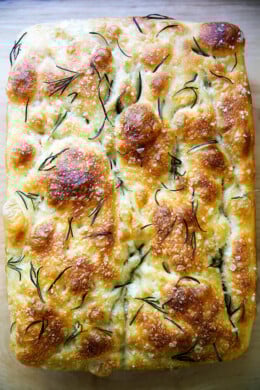
- #2. Faux focaccia. Instead of spreading butter in two Pyrex bowls in preparation for baking, butter one 9×9-inch glass baking dish and one Pyrex bowl or just butter one large 9×13-inch Pyrex baking dish. If using two vessels, divide the dough in half and place each half in prepared baking pan. If using only one large baking dish, place all of the dough in the dish. Drizzle dough with 1 tablespoon of olive oil (if using the small square pan) and 2 tablespoons of olive oil (if using the large one). Using your fingers, gently spread the dough out so that it fits the shape of the pan. Use your fingers to create dimples in the surface of the dough. Sprinkle surface with chopped rosemary and sea salt. Let rise for 20 to 30 minutes. Bake for 15 minutes at 425ºF and 17 minutes (or longer) at 375ºF. Remove from pan and let cool on cooling rack.
- #3. Thyme Dinner Rolls
- #4 Gluten-free
- #5. Everything Bagel Seasoning Bread. Simply coat the buttered bowls with everything bagel seasoning. Other seeds and seed mixes work, too, like sesame seeds and dukkah.
- #6: Whole Wheat Peasant Bread. Use as much as 50% whole wheat flour.
- Prep Time: 5 minutes
- Cook Time: 32 minutes
- Category: Bread
- Method: Baked
- Cuisine: American
This post may contain affiliate links. Please read my disclosure policy.






7,129 Comments on “My Mother’s Peasant Bread: The Best Easiest Bread You Will Ever Make”
@ Jen – If you are using quick yeast, you don’t need the second rise. Make the dough, and let it sit 10 minutes. Then put it in the pans ( or bowls) and let rise the 30 minutes, then bake as directed. If you use quick yeast and let it rise once, then again, it won’t have anymore ooompf left and won’t work. Hope that helps!
Just had to tell you that I have tried making many recipes since we’re trying to save money and looking into baking our own breads and such. I have had such a tough time being successful with them and tried yours- and ta-da! It worked and it worked wonderfully! Great taste, wonderful aroma of bread in my house as it baked, it rose beautifully! The only question I have for you- is if there’s any information on the dietary numbers: fats/ cals, etc. If not, it’s no big deal- I’m following Weight Watchers and try to count all my points so I thought I’d ask. But thank you for this amazing recipe! I can’t even tell you how excited I was to see that it worked and taste such wonderful homemade bread!
Liz — wonderful to heat this! OK, I have not calculated the dietary info on this recipe, but several commenters have pointed me to this site: myfitnesspal.com, which I believe allows you to enter the ingredients, and it in turn tells you the info. I don’t know if this will help you with the Weight Watchers point counting, but I hope it does! Let me know if you have any other questions!
I just made this and followed the exact recipie and OMG it is AMAZING!!! This wAs my very first bread making attemp and i feel like the greatest baker ever! 🙂 I did the second rise longer than what you said (about 2 hrs) but this is perfect! We’ve already eaten one loaf and I’m going to make more tomorrow just in case we eat the second loaf tonight. I will always make this from now on.
Shannon — so wonderful to hear this? I know, isn’t making homemade bread such a triumph?!
Hi Alexandra,
I am so excited to make this bread. I really love baking but have rarely succeeded, only the artisan bread in 5 minutes is that I tried several times and only one time it was actually edible. I have been wanting to make my own bread and not buy from outside, with rare exceptions. It really made me happy when my own bread turned out good.
Thanks!
Sana, good luck with the recipe! Let me know if you have any questions. Happy Baking!
Thank you so much for posting this recipe! I’ve never made bread before (except for Irish Soda Bread, but that doesn’t exactly count), so I was a little nervous but determined to try it! Your instructions were super easy to follow and I liked the pictures that went along with them. My bread turned out super scrumptious!!! I am now sharing your recipe with everyone I know! 🙂
Wonderful to hear this, Laura!
I made this today. All I can say is OMG!!! This is a no fail awesome bread. I divided mine into 5 parts and baked 4 of them in ramikins and 1 in a small crock bowl. I will be making more. I will be looking for some smaller pyrex bowls to make bread soup bowls. I usually used store bought sourdough, but these are much better. Thanks so much for sharing. Your mama does the right thing by not skimping on the butter.
Thanks again! Tom
Tom — so wonderful to hear this! I love baking this dough in ramekins, too, and I love the idea of making bread bowls. And yes, my mother never skimps on the butter — it adds flavor, helps with browning and crimping, and prevents sticking. No reason to hold back!
Im making this bread today and its first time Ive made bread since i was in home ec freshman year. Fingers crossed it turns about better than that bread (it was hard as a hockey puk and the taste was pretty terrible lol) will let you know how it turns out 😀
Kirsty — do report back! I would love to hear how it turned out for you.
so have no made this bread oh probably a dozen times now, and everyone in my house LOVES it. infact i have too hide 1/2 a loaf so that i can make it into toast the next day, best toast ever. waiting for summer to be over so that its cool enough to bake again. I also made a batch with whole garlic cloves in it for a dinner party, and there was no hiding that, it was inhaled. thank you for sharing this recipe, i will be making it for many more years (and mouths!) 😀
awesome to hear this! I am so intrigued by the whole cloves of garlic. Can you tell me more? Do you just add whole, peeled cloves of garlic? Or is there more prep?
Alexandra,
I have been making bread for 30 years and I love to try different recipes that catch my eye. I found your peasant bread via Pinterest and just finished making it today..I just had a slice and it’s wonderful. I like the fact that it is so simple. While I love making bread that you have to knead I also loved the fact that I could mix this easily and just walk away. 🙂 Thanks for sharing a wonderful old family recipe. I have a very old family recipe of a chocolate cake that my grandmother taught me. Email me if you’d like to have it…my way of saying thanks for sharing.
God bless.
Tania — wonderful to hear this! And I will absolutely email you for that chocolate cake recipe! Love old family recipes.
Baked this again, for the 2nd time in a week. Made one of the loaves with cinnamon-sugar. I coated the buttered bowl with a little cinnamon sugar mixture and sprinkled some on top of the dough. It turned out delicious! Gave even more of a crunch to the crust.
Jennifer — I love this idea. One commenter even made monkey bread using this dough. Dying to try a cinnamon-sugar-topped variation. Thanks for sharing!
Can you use a metal bowl or does it have to be glass?
Kayla — you can use metal bowls, too. I haven’t tried but many of the commenters have had success with metal loaf pans and metal bowls. Just be sure to really grease whatever vessel you are using with butter — it adds flavor, helps with browning and crisping, and allows for easy removal. It’s best not to skimp!
Well I tried to make this bread again today and this time it didn’t rise the second time. The first rise was awesome and when I folded it into itself I could hear all the air coming out of it but now it’s just a flat ball of dough. Any ideas?
Shannon — It’s ok for the air to come out of it when you punch it down — that should happen. Now, when you go to do the second rise, are you splitting the dough in half and placing each half in buttered bowls? What size are the bowls? Also, what kind of yeast are you using? And how are you doing your first rise? In a warm spot or just on your counter some place?
Made this last night and it came out amazing! Me, the hubby and my kids love it! Its already almost gone and my daughter is begging me to start another batch already. Thanks so much for the recipe. 🙂 This was my first attempt at making bread and i’m really glad I found this recipe to do it with!
Hi Alexandra. I am mid bake right now and kinda nervous. I just read a few of the comments which just answered my question. As a total amateur, I need complete instructions spelled out for me, such as, walk toward oven, open door, etc (sorta kinda kidding). I was thinking how this could be a tad more helpful for folks like myself. What I think is confusing with the second rise is- in Step 4 it says preheat oven to 425, then let rise. I was left wondering if the dough was to go back into oven, otherwise why preheat to 425, then reduce heat later, you know? Then it basically says “rise 30 minutes, then bake 10 minutes, etc.” I feel kinda dumb saying this but I put my pre-2nd rise dough into the oven for 7 minutes at the 425,. I just grabbed it out in a panic while reading the comments. I hope the 2nd rise works…. Will find out. It appears you you care very much about your commenting bakers, do you think you could spell it out just a tad clearer? I hope you aren’t upset by my suggestion.
Anxiously waiting for perfect bread,
Hollie
Hollie! Yes, I do care very much about my baking commenters especially with this recipe. I could never be upset with your suggestion, and I’m sorry for the confusion in step 4. So, what you should do at this step is leave the bowls filled with the dough outside of the oven. They should rise for about 30 minutes before you put them in the preheated oven at 425 for 10 min, and they should stay in the oven when you reduce the temperature to 375.
I imagine your dough sunk after you pulled it out after the seven minutes? I’m so sorry for the confusion. I’ll make the instructions more clear.
Let me know if you have any other questions!
We used to go to a restaurant that baked their bread in clay type flower pots.
Wait, Kelle — it wasn’t in Philadelphia on 4th Street near South street, was it? I’m blanking on the name. It was a great BYOB.
Kelle — hi again, was the restaurant called Django?
I made this bread yesterday for dinner and it was amazing! Everyone loved it! In fact, it was the first bread I have made that actually turned out like the instructions said it would. Yay! I’m looking forward to making this bread again (and again and again). I would love to know cooking times for smaller loaves; this bread is good that I would love to give it as a gift.
Wonderful to hear this Deborah! For ramekins and muffin tins, I bake the bread for about 20 to 25 minutes depending on the size. You just have to use your judgement. I like to do 15 minutes at 425 and then about 5 to 10 minutes at 375 depending on the size of the mini pans. Hope that helps!
I just made the peasant bread. I had a problem. I buttered the bowels as directed but the bread stuck something fierce.
What did I do wrong? I had to use a table knife to pry it out and in the process broke one bowl and so lost the bowl and that loaf of bread. Has anyone else had this problem?
Pat — I’m sorry to hear this. Butter usually does the trick — I butter very generously — but even people with a lighter touch rarely have trouble with butter. It’s olive oil that causes people trouble. As for the bowl breaking, that is strange. What kind of bowl were you using? I do know that the Pyrex bowls made today are not as strong as the ones they used to make, but I have only heard about shattering when you take the hot bowl and place it in cold water or on a really cold counter top. I’ve never heard of a bowl shattering otherwise. So sorry for the lost bowl and loaf of bread.
This is my first time to bake real bread in an oven and I DID IT!
I only had whole wheat flour so I had to go with that. At your suggestion I had gotten the Red Star yeast through Amazon and put about a cup in a jar to refrigerate and the rest is in the freezer. I also only had dehydrated cane sugar (succanant) so I used that. I followed the instructions and used 2 loaf pans. The loaves did stick a little mostly on the bottom so they got a few scars getting them out with a knife but they are nice and crunchy loaves, very pretty (wish I could add a pic 🙂 thanks so much for sharing this recipe, now I know how to bake bread, mmmm
Autumn — Wonderful to hear this! It’s always encouraging when the first time is a success… with the exception of the sticking, but that is easily fixed with a little more butter…yummm. How nice to have a couple loaves of whole wheat bread on hand. Thanks for writing in!
I love your recipe! This was my first attempt to make bread as a married woman… and I was so amazed how easy and delicious it was! Thank you for sharing!
Dana — wonderful to hear this!
Well my turn to not explain well enough. The bowl broke when it slid off of the counter onto the tile floor as I was prying.
As of this moment I am eating “skillet toast” made from my surviving loaf. So good.
I will get another bowl and try again.
What about Pam fo keep from sticking? Do you think that would work?
Pat — Oh, how frustrating. Even if the bowl was broken from a crash, it’s still an annoyance. Glad to hear the skillet toast is good. I have never used Pam, but I think if you are generous enough with any sort of fat, sticking should be prevented. Butter, and a generous amount of it, I find to be the best as far as preventing sticking and adding flavor. Hope that helps!
Just made this for the second time tonight with variations. I substituted 3 cups sprouted spelt flour & 1 cup reg white and added 1 cup fresh buttermilk for half the liquid. The buttermilk helped it stay moist. while the loaves are sort of flat they taste great with homemade butter and raw honey. yumm 🙂
D — thanks so much for sharing this much more healthful variation of the bread. I would love to try it. I think flat is ok especially when you know it’s because you are eating more whole grains. Love the idea of homemade butter and honey. Thanks for sharing!
If you want to use whole wheat an easy way to make sure it doesnt turn the bread into a heavy brick is to soak the whole wheat flour with milk. I say soak, but I guess that isnt what I mean really. If you mix WW flour with enough milk to make it similar to dough, set it in the fridge overnight so milk will act on the heavy graham and break it down so the resulting bread is much lighter.
This bread is amazing,I cant believe it worked!!! I made it last week and it went so fast i thought about doubling the amounts. Can i do that?
Lori — I think you can certainly double the amounts. The issue would be if you have enough bowls to bake off all of the loaves? You can of course bake off two at a time, and just wash bowls in between if you have to, but otherwise, doubling should work just fine. Good luck with it!
I love the bread, have made it 3 times now with the same result, delicious, but not at all risen like your pictures. I follow the directions exactly, and the first rise is more than double, then the fork action and split, buttered bowls, second rise……almost nothing.
Any suggestions? Thanks!
Valorini — I have a few questions. First, what size bowls are you using? I think my bowls (which are 1 qt) make the second rise look more dramatic than it actually is. When I make the loaves in larger bowls, they don’t seem to rise as much, but it’s all relative to the bowl. I never let the second rise go much more than 20 to 30 minutes, and when I bake the loaves in larger bowls, the dough never creeps above the rim before I stick it in the oven. It does rise above the rim during baking, but again, not as dramatically as when in the smaller bowls. I hope that makes sense. Second: what kind of yeast are you using? And how are you doing your first rise? In a warm spot?
I have about 7 mins. till the bread is done. The smell is fantastic and just about pulled it out of the oven to taste test!!!! First time jitters made me nervous. I am guessing I took 20 more steps to complete, and a lot of dishes. Maybe second time around I will be more efficient. Thanks for the recipe.
Dennis D — Once you get the hang of this, it will take no time to throw together. I hope the bread tasted as good as it smelled for you!
The first time I made this is handled as expected, but was rather flat. The finished product tasted good, though. Making it for a second time today and it is beautiful. Both of the rising times at least doubled in size and it is now in the oven baking! Can’t wait for dinner!
Homeatlast — wonderful to hear this! Did you do anything differently this time? I am still trying to help some people out with that second rise. I don’t know why it isn’t working out for some people. Also, what size bowls are you using? I’m just curious.
Tried your recipe today and am very pleased with the result. Not bad for a first time try! Mine didn’t brown as well nor rise as well as yours appears to but it wasn’t real dense and it still tastes lovely. 🙂 Thank you for sharing your recipe!
Eileen — something that might help with the browning is altering the baking time: try 15 minutes at 425, and 17 min at 375. Also, greasing the bowls really well with butter helps with the browning, too.
This looks delicious! I want to try it today, but I only have bleached all-purpose flour. Can you explain to me why I can’t use it? Thanks for the recipe!
Susan — you actually can use it, it’s just not preferable. A few commenters have made it with bleached flour and said that it came out really well, so maybe it was just the brand of bleached flour I was using. I found that the bleached flour didn’t brown as well and the texture of the finished loaf was just a little different than what I am used to when I make it with unbleached flour. Hope that helps. Good luck with it!
I made a batch of this bread this afternoon. I really wasn’t expecting the results I got because of not having to knead it. It is soooooo good. I just finished gobbling down a big buttered slice. I used the 1 lt pyrex bowls you suggested & it rose beautifully. The texture is way smoother than I expected & the taste is delicious. Thankyou for a great recipe. I sure won’t be kneading anymore bread dough cause this is the recipe I’ll be using from now on. The forks worked great too.
Wonderful to hear this, Brenda! I know, I used to love making kneaded breads, but they definitely take more time, and you can get great results without kneading, so it’s hard to beat the convenience. Glad you like the 1 lt Pyrex.
Ok so I’m now completely addicted. I was wondering, can you brush the top of the loaves with butter so that you end up with the same crust on all sides? The buttery goodness is so addictive!!
Lily — I can’t see how brushing the tops with butter would be anything but delicious 🙂 I worry a little however that they might brown too quickly? You could maybe save the brushing for the last 5 minutes of baking or so? I also find that if I bake the loaves at 425 for 15 minutes and then at 375 for 17 minutes, they brown a little bit more on top.
I just made this bread, however, made rolls instead of the bowl. Worked perfectly. Thanks so much for easier way to make great bread !